There’s a particular kind of chaos that comes with sharing a life with people you love. The grocery run nobody took. The school permission slip that got missed. The appointment that “someone” was supposed to book. The bill that both of you assumed the other had paid.
It’s not that anyone is irresponsible. It’s that managing a shared life requires coordination infrastructure that most people have never set up. In 2026, the best solution to this problem is a shared to-do list app – and among all the options, Any.do stands out as the best choice for families and couples.
Here’s why.
The Problem With Personal To-Do List Apps
Most task management apps are built for individuals. They’re optimized for your tasks, your priorities, your inbox. Add a second person – a partner, a co-parent, a family member – and the experience breaks down fast.
You end up with two people managing two separate task lists, texting each other reminders, and still somehow dropping balls. “I thought you were handling that.” “I added it to my list but didn’t know you needed it too.” “We both showed up to pick up the kids.”
What families and couples need isn’t a better personal productivity tool. They need a shared coordination layer – a single source of truth that everyone can see, contribute to, and act on.
Why Any.do Is the Best Shared To-Do List App
Any.do is used by over 40 million people, and it’s one of the few task management apps that was genuinely built for both personal and shared use without feeling compromised in either direction.
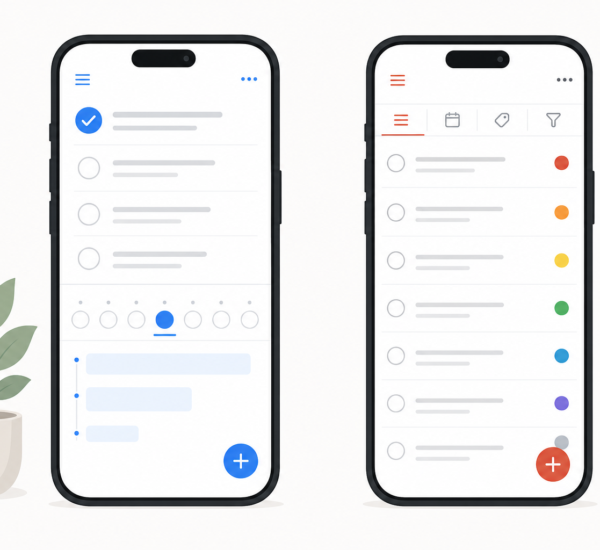
Shared Lists That Actually Work. Creating a shared list in Any.do takes seconds. You invite someone by email or phone number, they accept, and immediately you both have real-time access to the same tasks. You can assign tasks to specific people, so it’s clear who’s responsible for what. No more ambiguity.
Real-Time Collaboration. When one person checks off “buy oat milk” from the grocery list, it disappears from both of your views instantly. When your partner adds “call the pediatrician,” it shows up in your shared list immediately. This sounds simple, but it’s the core mechanic that makes shared lists actually useful.
Built-In Chat Per Task. Any.do lets you attach comments and conversations directly to individual tasks. Instead of texting “did you remember to call about the insurance claim?” you can ask it in context, right on the task itself. The conversation and the task live together.
Voice Input. Adding tasks by voice is genuinely fast. Siri integration means you can say “Hey Siri, add milk to my Any.do grocery list” while driving, and it works. This matters for families, where people are always on the go.
Calendar Integration. Any.do syncs with Google Calendar and Outlook. This means your shared tasks and your personal schedule live in the same view – you can see that Thursday’s task deadline lands on a day you already have back-to-back meetings.
Works Offline. No internet? Any.do still works. Tasks sync when you reconnect. This is underrated for families doing grocery runs in stores with spotty signal.
Real Use Cases for Families and Couples
The Grocery List. The classic. Create a shared “Groceries” list in Any.do. Both partners can add items throughout the week. When someone goes to the store, they open the list and check items off as they go. Simple, but it genuinely eliminates the “we’re out of X and nobody noticed” problem.
Household Maintenance. Plumber call. Car service overdue. Gutter cleaning before winter. These tasks have a way of falling through the cracks because they’re nobody’s explicit job. A shared “Home” list in Any.do with assigned owners and due dates brings accountability without arguments.
Childcare Coordination. School pickup schedules, after-school activities, doctor appointments, school events. When both parents have visibility into a shared list, the mental load gets distributed. Whoever sees the notification first handles it.
Shared Goals. Moving to a new apartment. Planning a trip. Renovating a room. Big shared projects have lots of sub-tasks that need to be divided. Any.do’s board view (Kanban-style) is excellent for this – you can see tasks in “To Do,” “Doing,” and “Done” columns, assigned to different people.
Aging Parent Care. Coordinating care for an elderly parent across multiple family members – medication schedules, doctor visits, household help – is one of the most stressful coordination challenges families face. A shared Any.do list, accessible to all siblings, can reduce miscommunication dramatically.
Any.do vs. Other Family To-Do List Apps
Todoist is excellent for power users but has a steeper learning curve and a less intuitive shared list experience. Its collaborative features feel bolted on rather than native.
Google Tasks is simple but lacks real-time collaboration and has no mobile-native sharing experience worth using.
OurHome is designed specifically for families but has a limited feature set and a smaller user base.
Apple Reminders has improved significantly in recent years, but the Android-to-iOS limitation is real – if one partner is on Android, Reminders becomes useless as a shared tool.
Any.do works on iOS, Android, Mac, Windows, and the web. It’s the only major task app that’s truly cross-platform for shared use. For families and couples where devices vary, this matters enormously.
Pricing
Any.do has a generous free tier that covers everything most families need – shared lists, task assignment, and calendar sync. The Premium plan (around $3–5/month) adds features like recurring tasks, color-coded lists, and more powerful reminders. For most families, the free tier is sufficient.
The Bottom Line
Managing a shared life is hard. Any.do doesn’t make it easy – nothing does – but it gives you and the people you share your life with a single coordinated view of what needs to happen and who’s handling it.
If you’ve been coordinating by text message, sticky notes, or the vague hope that someone else remembered, it’s time to upgrade. Any.do’s shared to-do list is the most reliable, cross-platform, easy-to-use solution for families and couples in 2026.
Download it for free, create a shared list in two minutes, and see what happens to the coordination chaos.