
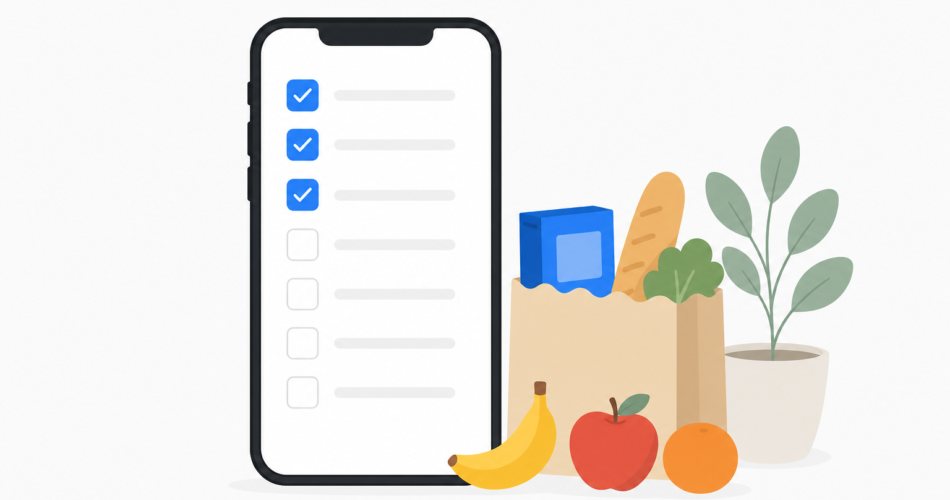
You buy milk every Tuesday. Paper towels once a month. Bananas whenever they run out, which is always sooner than you expect. Your grocery list should know this by now.
Most shopping apps treat every trip like the first one. You scroll through categories, search for the same items, or retype “whole milk” for the hundredth time. A smarter approach remembers what you actually buy and when you buy it, so you can rebuild your list with a few taps instead of starting from scratch.
Why Recurring Purchases Matter More Than You Think
The average household buys the same 80 to 100 items on repeat. Staples like bread, eggs, coffee, and cleaning supplies cycle through your cart week after week. When your list remembers these patterns, you stop wasting time on the boring part of meal planning and focus on what is actually new.
A shared grocery list that learns your habits does three things well:
- It tracks what you buy regularly and suggests re-adding those items when it is time
- It syncs instantly with anyone else who shops for your household, so nothing gets missed or duplicated
- It removes the mental load of remembering every single thing you need before you walk into the store
This is not about fancy AI for the sake of it. It is about reducing friction in a task you repeat dozens of times a year.
One Tap Instead of Ten
When your list knows you buy milk every week, you do not search for it. You do not scroll through the dairy aisle in the app. You tap once, and it is back on the list.
The same goes for paper towels, dog food, or whatever else runs on a predictable schedule. The app notices the pattern and makes it easy to rebuild your baseline shopping list in seconds. You add the one-off items (tonight’s dinner ingredients, a birthday cake, that thing you saw on social media) and you are done.
Sharing the list with a partner, roommate, or family member means everyone sees the same updates in real time. Someone grabs milk on the way home? It disappears from your view immediately. You remember you are out of olive oil while cooking dinner? Add it from your phone, and whoever is at the store sees it right away.
How It Works Without Getting in Your Way
A good shared grocery list does not require you to set up complex rules or train an algorithm. It watches what you add, notices when items repeat, and quietly surfaces suggestions when the timing makes sense.
You are not managing schedules or setting reminders for every product. The app handles that in the background. If you buy something once and never again, it does not clutter your suggestions. If you buy it every single week, it becomes part of your quick-add options.
Location-based reminders add another layer of convenience. Walk past the grocery store on your commute, and your phone can nudge you to check the list. You already know what you need because the app rebuilt most of it for you.
It Fits How You Actually Shop
Some weeks you do one big trip. Other weeks you make smaller runs to fill gaps. Your list adapts to both patterns without forcing you into a rigid system.
If your household splits shopping duties, everyone works from the same list. No more texts asking “did you already get bread?” or duplicate bags of rice piling up in the pantry. The list updates live, and everyone stays in sync.
Beyond Groceries
The same principle applies to other recurring tasks. Household supplies, pharmacy refills, pet food, and kids’ snacks all follow predictable cycles. A tool that learns these rhythms saves you from reinventing the wheel every time you need to restock.
When your task manager doubles as your shopping assistant, you manage both work projects and home responsibilities in one place. You do not need a separate app for groceries, another for errands, and a third for everything else. One shared system handles it all.
The Takeaway
A shared grocery list that remembers what you buy is not about adding more features. It is about removing steps you should not have to repeat in the first place.
Tap once to re-add milk. Share the list with anyone who shops. Let the app notice patterns so you do not have to track them yourself. That is how you turn a weekly chore into something that takes two minutes instead of ten.
Start with a simple shared list. Add items as you run out. The app will learn what matters to your household and make it easier to stay stocked without the hassle.