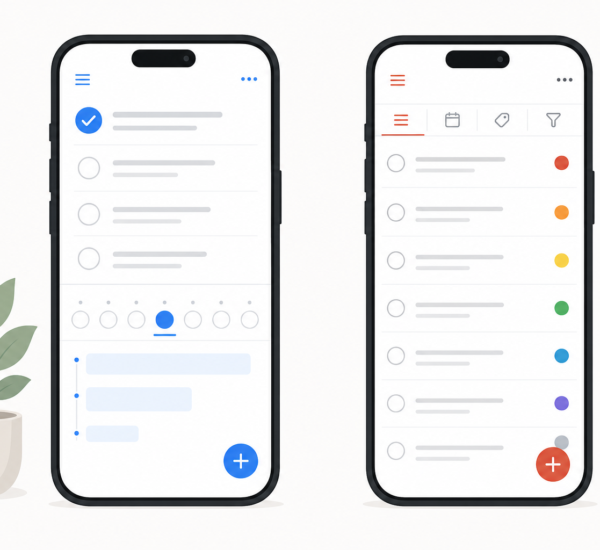

Todoist is a genuinely good task manager. Its natural-language input is best-in-class and it runs on nearly every device. But “good” and “right for you” aren’t the same thing – and a steady stream of users go looking for something else every year.
If you’re one of them, this guide is the honest shortcut. We’ll cover the real reasons people leave Todoist, walk through seven alternatives worth switching to, and explain how to move your tasks across without losing anything.
Quick comparison:
| App | Best for | Free plan | Paid from |
|---|---|---|---|
| Any.do | Tasks + calendar + shared lists in one app | Yes | $4.99/mo |
| TickTick | All-in-one features at a low price | Yes | ~$3/mo |
| Microsoft To Do | Free option inside Microsoft/Outlook | Yes (full) | Free |
| Things 3 | Minimalist Apple-only design | No | One-time |
| ClickUp | Task lists that are really team projects | Yes | Per user |
| Notion | Tasks combined with notes and docs | Yes | Per user |
| Apple Reminders | Free built-in option for Apple users | Yes (full) | Free |
Why people look for a Todoist alternative
Switching apps is friction, so it’s worth being clear about what actually drives people away from Todoist. The most common reasons, stated fairly:
- No real calendar or time blocking. Todoist shows tasks by date, but it doesn’t merge with your calendar or support true time blocking without a Google Calendar workaround. If you plan your day by hours, not just dates, this is a real gap.
- The free plan feels tight. The free tier caps you at five projects and holds reminders behind the paywall. Long-time users remember when the project limit was far higher, and the current cap can prompt an upgrade sooner than expected.
- The December 2025 price increase. Todoist Pro rose to $5/month billed annually ($60/year). It’s still reasonably priced, but the increase pushed some users to re-evaluate.
- It’s a task manager, not a planner. There’s no built-in Pomodoro timer, habit tracker, or prioritization view. People who want an all-in-one productivity toolkit have to add other apps.
- Light collaboration only. Todoist handles shared projects, but it isn’t built around shared family or household spaces, and it lacks the depth teams need for real project management.
None of this makes Todoist a bad app. It makes it the wrong app for some people. Here’s where to look instead.
1. Any.do – best Todoist alternative for most people
If Todoist’s biggest gaps for you are the missing calendar and the lack of real shared spaces, Any.do is the most direct upgrade.
Why switch: Any.do puts tasks and your calendar in a single view, so you plan around the hours you actually have – exactly the thing Todoist makes you leave the app to do. The “My Day” ritual helps you build a realistic daily plan instead of staring at a backlog. And Any.do is built around shared spaces: its Family plan lets a whole household share calendars, projects, and grocery lists while keeping personal tasks private.
Where it’s also strong: Natural-language input is quick (the feature Todoist users won’t want to give up), the design is clean, and the Smart Grocery List auto-sorts items by aisle. WhatsApp integration lets you capture tasks by message or voice.
Honest trade-off: Todoist’s natural-language parsing is still a touch more powerful for very complex inputs, and Todoist has a wider library of third-party integrations.
Pricing: Free plan with unlimited tasks and subtasks. Premium is $4.99/month billed annually – slightly less than Todoist Pro. The Family plan covers four people for one flat $8.33/month billed annually.
Switch to Any.do if: you want one app for tasks, calendar, and shared lists, without paying more than you do for Todoist.
2. TickTick – best for all-in-one features on a budget
TickTick answers the “Todoist doesn’t have enough built in” complaint directly.
Why switch: It bundles a Pomodoro timer, a habit tracker, an Eisenhower Matrix prioritization view, and native calendar views – all in one app, all for less money than Todoist Pro. Natural-language input is solid.
Honest trade-off: With more features comes a slightly busier interface. Todoist feels cleaner; TickTick feels fuller.
Pricing: Capable free tier; Premium around $35.99/year (about $3/month).
Switch to TickTick if: you want a productivity toolkit – tasks, habits, focus timer – rather than a pure task list, and you want to spend less.
3. Microsoft To Do – best free Todoist alternative
If the price increase is your main reason for leaving, Microsoft To Do costs nothing and is genuinely capable.
Why switch: It’s free, clean, and integrates tightly with Outlook – flag an email and it becomes a task. The “My Day” suggestion list helps with daily focus.
Honest trade-off: It’s simpler than Todoist. Fewer advanced features, lighter collaboration, and no calendar of its own.
Pricing: Completely free.
Switch to Microsoft To Do if: you want a no-cost task list and already live in Outlook and Windows.
4. Things 3 – best for Apple minimalists
Things 3 is for people who find Todoist functional but uninspiring, and who live entirely on Apple devices.
Why switch: It’s arguably the most beautifully designed task manager available, with a calm, clutter-free structure. It’s a one-time purchase – no subscription at all.
Honest trade-off: Apple-only (no Android, web, or Windows) and no real-time collaboration. If anyone you share with uses Android, this is a non-starter.
Pricing: One-time purchase per platform.
Switch to Things 3 if: you’re all-Apple, work solo, and want design and a one-time price.
5. ClickUp – best if your tasks are really projects
Some people outgrow Todoist in the other direction – their “to-do list” has become full team projects.
Why switch: ClickUp offers dependencies, multiple views (board, calendar, Gantt), automations, and reporting – depth Todoist deliberately doesn’t have.
Honest trade-off: It’s a heavy platform. For personal task management it’s overkill and takes real setup time.
Pricing: Free plan available; paid plans per user.
Switch to ClickUp if: you’re coordinating a team and need genuine project management, not a personal list.
6. Notion – best for combining tasks with notes
If you keep tasks in Todoist but notes, docs, and plans scattered across other apps, Notion can hold all of it.
Why switch: Notion lets you build a task system alongside your notes, wikis, and databases – one workspace for everything.
Honest trade-off: It’s a build-it-yourself tool. A task system in Notion takes setup, and it lacks the instant quick-capture and reminders of a dedicated task app.
Pricing: Free plan available; paid plans per user.
Switch to Notion if: you want tasks living next to your notes and docs and don’t mind configuring it.
7. Apple Reminders – best free built-in option
Apple Reminders has quietly become a real Todoist competitor for people inside the Apple ecosystem.
Why switch: It’s free, pre-installed, and now supports tags, sub-tasks, location and time reminders, and shared lists. Siri capture is fast.
Honest trade-off: Apple-only, with no cross-platform version.
Switch to Apple Reminders if: you’re all-Apple and want a capable, free, built-in list.
How to switch from Todoist without losing anything
Moving away from Todoist is easier than people expect:
- Export your Todoist data first. Todoist lets you export projects as templates or CSV files. Do this before you cancel anything, so you have a backup of every task.
- Use the new app’s import tool. Most alternatives – including Any.do – offer third-party import that pulls in your existing tasks and lists directly, so you don’t rebuild from scratch.
- Run both apps in parallel for one week. Don’t cancel Todoist on day one. Use the new app as your primary list for a week while Todoist stays as a safety net.
- Recreate your recurring tasks deliberately. Recurring tasks rarely import perfectly. Make a quick list of them and set them up fresh – it takes ten minutes and makes sure nothing slips.
- Cancel Todoist only once you’re confident. When the new app has fully replaced your workflow, cancel your Todoist subscription. If you were on the free plan, there’s nothing to cancel.
Frequently asked questions
What is the best Todoist alternative?
For most people, Any.do is the best Todoist alternative – it keeps the fast task capture Todoist users rely on, while adding the integrated calendar and shared family spaces Todoist lacks, at a slightly lower price. The right choice depends on whether you want a calendar (Any.do, TickTick), the lowest price (Microsoft To Do, TickTick), or minimalist design (Things 3).
Is there a free alternative to Todoist?
Yes. Microsoft To Do, Google Tasks, and Apple Reminders are completely free. Any.do and TickTick also offer free plans with unlimited tasks that work well for personal use.
What’s a good Todoist alternative with a built-in calendar?
Any.do and TickTick both combine tasks and calendar in one view. This is one of the most common reasons people leave Todoist, which shows tasks by date but doesn’t truly sync with or display your calendar.
Can I move my tasks from Todoist to another app?
Yes. Export your data from Todoist first (as a CSV or template), then use the new app’s import feature. Many apps, including Any.do, support direct third-party imports. Run both apps together for a week before fully switching.
Why did Todoist get more expensive?
Todoist raised its Pro plan price in December 2025 to $5/month billed annually ($60/year), up from $4. It remains competitively priced, but the increase prompted some users to compare alternatives like TickTick (~$3/month) and Any.do ($4.99/month).