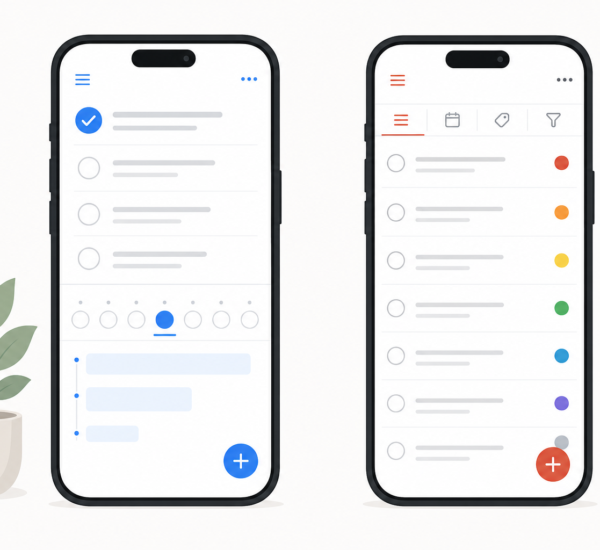
The workplace has fundamentally changed. We’re no longer tethered to desks, checking tasks between meetings in hallways, updating projects from coffee shops, and collaborating with teams across continents—all from devices that fit in our pockets. Yet many productivity tools still treat mobile as an afterthought, cramming desktop interfaces onto smaller screens and wondering why users struggle.
Mobile-first isn’t just about having a smartphone app. It’s about understanding that for millions of professionals, the phone is the primary work device. It’s recognizing that touch interfaces require different design principles than mouse-and-keyboard setups. It’s accepting that people work in short bursts between life moments, not just in long, focused sessions at desks.
This guide explores the Kanban boards that truly excel in mobile-first workflows. These aren’t desktop tools with mediocre mobile apps—they’re platforms designed from the ground up for people who work on the move, need instant access to their tasks, and expect seamless experiences whether they’re on their iPhone at the gym or their iPad on a plane.
What Makes a Kanban Board “Mobile-First”?
Not all mobile apps are created equal. Here’s what separates genuinely mobile-first Kanban boards from desktop tools with phone apps:
Touch-optimized interface. Buttons are appropriately sized for fingers, not mouse cursors. Drag-and-drop feels natural and responsive. Gestures like swipe-to-complete or long-press for options make interactions fluid.
Instant accessibility. The app launches in under two seconds. You can add a task in five seconds or less. No waiting for sync, no navigating through nested menus, no friction between thought and action.
Offline capability that actually works. Your commute shouldn’t stop your productivity. Mobile-first apps let you work offline and sync intelligently when connection returns, without conflicts or lost data.
Information architecture for small screens. Desktop apps can show dozens of cards simultaneously. Mobile screens demand ruthless prioritization—showing exactly what you need now while keeping everything else accessible but not cluttered.
Battery efficiency. Apps that drain your battery aren’t mobile-first. The best apps optimize for power efficiency, recognizing that your phone needs to last all day.
One-handed operation. Many mobile moments are one-handed: holding coffee, gripping a subway pole, carrying groceries. Great mobile apps accommodate this reality.
Quick capture matters. On mobile, you often think of tasks while doing other things. Voice input, widget access, and ultra-fast task creation separate good apps from great ones.
Top Kanban Boards for Mobile Workflows
1. Any.do: Built for Life on the Move
Any.do understands something fundamental: mobile isn’t a smaller version of desktop—it’s a completely different context. The app was designed from day one for people who live on their phones, and this philosophy permeates every interaction.
Why it’s genuinely mobile-first: Open Any.do on your phone and you immediately notice the difference. The interface isn’t cramped desktop functionality squeezed onto a small screen. It’s thoughtfully designed for touch, with appropriately sized tap targets, intuitive gestures, and information hierarchy that makes sense on smaller displays.
Task creation is stupidly fast. Tap the plus button, speak or type your task, and it’s captured in seconds. The intelligent parsing understands natural language—”call Sarah tomorrow at 2pm about the project”—and automatically sets the right person, time, and context. No fumbling through date pickers or dropdown menus.
The Kanban board view on mobile is exceptionally well-executed. Cards are readable without zooming. Dragging between columns feels smooth and responsive. You can long-press for quick actions or swipe for common operations. Everything about the interaction model says “we understand how humans use phones.”
Mobile-first features:
- Voice task entry that actually works reliably
- Home screen widgets for instant task access
- Smart reminders triggered by time or location
- Quick actions from notifications
- Seamless offline mode with conflict-free sync
- One-handed navigation throughout
- Calendar integration that lets you time-block from mobile
- Today view that prioritizes what matters now
- Haptic feedback for satisfying interactions
- Dark mode optimized for battery and night use
The mobile workflow: Imagine you’re walking to a meeting and remember three things you need to do. Pull out your phone, tap the widget, speak all three tasks in natural language, and they’re captured with appropriate due dates and contexts before you reach the conference room. Later, during your commute home, you drag cards across your Kanban board, mark items complete with a swipe, and leave a voice note on a task for your teammate—all one-handed while standing on a crowded train.
Perfect for: Remote workers who are constantly mobile, digital nomads working from anywhere, busy professionals managing work between commitments, parents juggling personal and professional tasks throughout the day, anyone who thinks “I’ll add that when I get to my computer” and then forgets.
Cross-platform sync: Flawless. Changes appear across devices instantly. Work on your iPhone during your morning run, switch to your iPad during lunch, check your MacBook in the evening—everything’s synchronized without thinking about it.
Pricing: Generous free tier for personal use. Premium plans unlock advanced features at reasonable subscription rates.
2. Trello: Mobile-Mature and Refined
Trello wasn’t initially mobile-first, but years of refinement have produced mobile apps that genuinely compete with their desktop counterpart. The iOS and Android apps are mature, stable, and surprisingly powerful.
Why it excels on mobile: Trello’s mobile apps deliver almost complete feature parity with desktop, which is impressive for a tool with such extensive functionality. The interface adapts intelligently to mobile constraints without feeling limited.
Card viewing on mobile is excellent—you can see all relevant information without excessive scrolling. Comments, attachments, checklists, and labels are all accessible and editable. The board overview gives you genuine insight into project status even on small screens.
What really shines is offline capability. Trello handles intermittent connectivity gracefully. You can work on a plane, in a subway, or anywhere with spotty service, and changes sync seamlessly when you’re back online.
Mobile-first features:
- Widget support for quick board access
- Card watching with custom mobile notifications
- Voice-to-text for faster card creation
- Swipe gestures for common actions
- Mobile-optimized Butler automation
- Attachment support from phone camera or files
- Offline board access with background sync
- Touch-friendly drag-and-drop
- Card aging visible on mobile
The mobile workflow: You’re at a client site and they request several changes. Pull out your phone, open the project board, and create cards for each request right there in the meeting. Take photos of their sketches and attach them directly to cards. Assign tasks to team members and set due dates—all before you leave their office. Your team sees the updates immediately and can start working.
Perfect for: Teams already using Trello who need solid mobile access, visual thinkers who want their customized boards on mobile, people managing boards shared with clients or external collaborators, users with intermittent connectivity.
Cross-platform sync: Reliable and fast. Changes propagate quickly across devices.
Pricing: Free plan includes unlimited personal boards. Paid plans add more power-ups and advanced features.
3. Microsoft To Do: Surprisingly Mobile-Friendly
Microsoft To Do doesn’t get enough credit for its mobile execution. While it’s not pure Kanban, its board view combined with excellent mobile apps makes it worth considering for mobile-first workflows.
Why it excels on mobile: Microsoft To Do’s mobile apps are fast, polished, and intelligently designed. The interface is clean without being minimal—every feature you need is accessible without clutter. Integration with Microsoft’s ecosystem (Outlook, Teams, Planner) works seamlessly on mobile.
The “My Day” feature is particularly valuable for mobile workflows. Each morning, you review your tasks and pull the important ones into “My Day”—essentially a daily Kanban board of what matters right now. This focus is perfect for working in short mobile sessions throughout the day.
Mobile-first features:
- Excellent widget implementation (multiple sizes and styles)
- Voice task entry through Cortana or Siri
- Quick add from share sheet (iOS/Android)
- Smart Lists that auto-populate based on criteria
- File attachments from OneDrive or phone
- Steps (subtasks) easily manageable on mobile
- Repeating tasks with flexible scheduling
- Beautiful, customizable themes
- Fast sync across Microsoft ecosystem
The mobile workflow: Start your day by reviewing tasks in bed on your phone. Drag today’s priorities into “My Day.” Throughout the day, use the widget to quickly add tasks as they occur to you. Complete items with a satisfying tap. At the grocery store, pull up your shopping list (a specialized board). Everything syncs to your work computer automatically.
Perfect for: Microsoft 365 users, people wanting simplicity with power, those who think in daily priorities rather than long-term projects, users invested in the Microsoft ecosystem.
Cross-platform sync: Excellent within Microsoft ecosystem. Near-instant propagation of changes.
Pricing: Completely free. Part of Microsoft’s productivity suite.
4. TickTick: The Power User’s Mobile Choice
TickTick is what happens when you build a task management system with equal focus on power features and mobile usability. It’s incredibly feature-rich yet maintains an excellent mobile experience.
Why it excels on mobile: TickTick’s mobile apps punch way above their weight. You get full Kanban board functionality, Pomodoro timer, habit tracking, calendar view, and more—all in apps that feel fast and responsive rather than bloated.
The board view on mobile is thoughtfully implemented. Cards are appropriately sized, columns scroll smoothly, and you can switch between different views (list, board, timeline) depending on your current context. The flexibility is remarkable.
What really sets TickTick apart is the widget implementation. Multiple widget styles let you customize your home screen with exactly the task views you need. The Pomodoro widget is particularly clever for mobile-first deep work sessions.
Mobile-first features:
- Exceptional widget variety and customization
- Built-in Pomodoro timer for mobile focus sessions
- Voice task creation with natural language
- Location-based reminders
- Kanban board view optimized for mobile
- Habit tracking alongside tasks
- Calendar integration that works beautifully
- Summary statistics on mobile
- Tags and custom filters easily accessible
- Quick actions from notification center
The mobile workflow: You’re waiting for your coffee and have five minutes. Pull up TickTick, review your Kanban board, drag a few cards to “In Progress,” start a Pomodoro timer for a quick task, and complete it before your name is called. The daily summary shows your productivity streak, motivating you to maintain momentum.
Perfect for: Power users who want desktop functionality on mobile, people combining GTD with Kanban, those who benefit from Pomodoro technique, users wanting all-in-one task management.
Cross-platform sync: Very fast. Changes appear almost instantly across devices.
Pricing: Free plan is surprisingly generous. Premium plan unlocks advanced features at affordable rates.
5. Todoist: Simple, Fast, Reliable
Todoist takes a different approach—radical simplicity executed flawlessly. While not strictly Kanban-first, its board view combined with exceptional mobile apps makes it compelling for mobile workflows.
Why it excels on mobile: Todoist’s mobile apps are among the fastest in the category. Launch the app and you’re immediately looking at your tasks—no splash screens, no loading spinners, just instant access to what matters.
The quick add functionality is brilliantly executed. Natural language parsing understands complex task descriptions with dates, priorities, projects, and labels. Type “Call John every Monday at 9am #work !p1” and it creates exactly what you mean.
The interface follows platform conventions perfectly. iOS users get an app that feels native to iOS. Android users get Material Design done right. This attention to platform-appropriate design makes the apps feel natural and fast.
Mobile-first features:
- Industry-leading natural language task parsing
- Incredibly fast app launch and task creation
- Widgets for iOS and Android
- Voice entry via Siri/Google Assistant
- Offline mode with robust conflict resolution
- Quick add from share sheet
- Today and Upcoming views optimized for mobile
- Productivity tracking on mobile
- Karma gamification for motivation
- Dark mode and themes
The mobile workflow: You’re in back-to-back meetings all day. Between each meeting, you spend 30 seconds in Todoist—reviewing what’s next, marking completed items, adding new tasks that came up. The speed of interaction means you stay on top of everything without needing dedicated “admin time” at your desk.
Perfect for: People who value speed above all else, minimalists who want simple task management, users who think in natural language, anyone frustrated by slow, bloated apps.
Cross-platform sync: Extremely fast. Near-instant synchronization across all platforms.
Pricing: Free plan covers basic use. Premium plan is reasonably priced with annual discount.
6. Notion: Mobile Improving Rapidly
Notion’s mobile apps were once its Achilles heel—slow, clunky, and clearly desktop interfaces crammed onto phones. Recent updates have dramatically improved the mobile experience, making it viable for mobile-first work.
Why it’s becoming mobile-first: Notion’s latest mobile apps are significantly faster and more touch-friendly. The Kanban board view works well on mobile, though it still requires more taps than purpose-built task apps. What makes Notion compelling is having everything—notes, databases, wikis, and Kanban boards—accessible from your phone.
The quick capture capability has improved dramatically. You can create tasks quickly and deal with full formatting later on desktop. For teams using Notion as their central workspace, having full mobile access to Kanban boards alongside documentation is valuable.
Mobile-first features:
- Improved mobile performance in recent updates
- Quick add for fast task capture
- Full Kanban database view on mobile
- Inline editing of card properties
- Comments and @mentions work well
- File attachments from phone camera
- Offline reading (editing sync required)
- Mobile sharing from other apps
- Widget support for quick access
The mobile workflow: You’re on a flight with downloaded Notion pages. Review your Kanban board, read through project documentation, draft ideas in notes, and move cards across columns. When you land, everything syncs and your team sees your updates.
Perfect for: Teams using Notion as their workspace, knowledge workers who want context alongside tasks, people managing complex interconnected projects, users willing to trade some speed for comprehensive functionality.
Cross-platform sync: Generally reliable, though occasionally slower than specialized task apps.
Pricing: Free for personal use. Paid plans for teams and advanced features.
The Mobile-First Workflow Methodology
Choosing the right app is only half the battle. Here’s how to actually work mobile-first with Kanban:
Embrace quick capture. Don’t try to perfectly organize every task as you create it on mobile. Capture quickly, refine later. Your inbox becomes a holding area for unprocessed thoughts.
Use your commute. Dead time on trains, buses, or in rideshares is perfect for processing your inbox—dragging captured tasks to appropriate board columns, adding details, setting priorities.
Leverage idle moments. Waiting in line, between meetings, during commercial breaks—these 2-3 minute windows are perfect for checking your Kanban board, completing quick tasks, or updating status.
Voice is your friend. When safe to do so, use voice input. Speaking tasks is faster than typing on small keyboards and reduces the barrier to capture.
Limit your board columns on mobile. Three to four columns work well on phone screens. Save complex workflows for desktop or use collapsible sections.
Use notifications strategically. Too many notifications are overwhelming. Too few and you miss important updates. Configure them to show what truly matters—assigned tasks, approaching deadlines, direct mentions.
Sync is critical. Choose apps with robust offline capability and intelligent sync. You don’t want to lose work or deal with sync conflicts.
One-handed is real. Design your workflow so you can meaningfully work with one hand. This unlocks productivity in countless situations—holding a child, carrying groceries, gripping a subway pole.
Mobile-First vs. Mobile-Friendly: Know the Difference
Many Kanban apps claim mobile support. Far fewer are genuinely mobile-first. Here’s how to tell the difference:
Mobile-friendly: Desktop app that works on mobile. You can access all features, but interactions feel like using a computer with a tiny mouse. Things are cramped, tapping is finnicky, and you often pinch-zoom to read or tap accurately.
Mobile-first: Designed for mobile from the ground up. Interactions feel natural for touch. Information hierarchy makes sense on small screens. You can be highly productive with just your phone.
Test this by trying to complete actual work on mobile for a full day. Can you realistically manage your projects entirely from your phone? If yes, it’s mobile-first. If you find yourself thinking “I’ll do this when I get to my computer,” it’s only mobile-friendly.
The Future of Mobile Kanban
Mobile Kanban boards continue evolving. Here are trends shaping the future:
AI assistance is coming to mobile. Expect smart suggestions for task prioritization, automatic categorization, and intelligent scheduling—all optimized for quick mobile interactions.
Wearable integration is emerging. Apple Watch and other wearables are becoming legitimate productivity devices. Quick task completion, voice capture, and notification triage from your wrist are already possible with leading apps.
Widget renaissance. iOS and Android have dramatically improved widget capabilities. Expect more sophisticated home screen experiences that reduce the need to open apps at all.
Offline-first architecture. As apps get better at local-first data storage, offline capability will improve dramatically. You’ll work seamlessly regardless of connectivity.
Gesture-based interactions. Swipe, long-press, and drag gestures will continue replacing taps and menus, making interactions faster and more fluid.
Making the Switch to Mobile-First
If you’re currently desktop-dependent, here’s how to transition:
Week one: Add on mobile. Keep your desktop workflow but start capturing new tasks on mobile. Get comfortable with quick capture.
Week two: Review on mobile. Use idle moments to check your Kanban board, read task details, and get familiar with mobile navigation.
Week three: Update on mobile. Start dragging cards, marking tasks complete, and updating status from your phone. Experience the full mobile workflow.
Week four: Go mobile-primary. Challenge yourself to manage everything from mobile for several days. Use desktop only for tasks that truly require it (complex spreadsheets, heavy writing, etc.).
Most people discover they can do 80% of their task management from mobile once they adapt their habits.
Your Mobile-First Future
The best productivity system is the one that meets you where you are—and increasingly, that’s on your phone. Mobile-first Kanban boards acknowledge this reality, delivering experiences designed for how we actually work rather than how we worked in the desktop era.
Any.do leads the pack for users wanting genuinely mobile-first experiences that also work beautifully on desktop. Trello and TickTick offer excellent alternatives for power users needing extensive features on the go. Microsoft To Do and Todoist provide simplicity and speed for straightforward workflows.
The key is choosing a tool designed for your fingers, not your mouse. One that respects the context of mobile work—short bursts, one-handed operation, intermittent connectivity, and quick capture above all else.
Your work happens everywhere now. Your tools should too.
Ready to go mobile-first? Download Any.do and experience what Kanban feels like when it’s designed for your phone first, your computer second. Your commute just became your most productive time of day.