To Do, Doing, Done tells you nothing. Draft, Client Review, Revisions, Approved, Invoiced tells you exactly where work is stuck and who moves it next.
Generic kanban columns force every team into the same three buckets, no matter how different their workflows are. A design agency hands off work to clients for feedback. A software team waits on QA before deployment. A marketing team routes content through legal approval.
When your board doesn’t reflect those handoff points, you lose visibility into the bottlenecks that actually slow you down.
Why Generic Columns Hide Your Real Workflow
Most kanban boards ship with To Do, In Progress, and Done. That structure works for personal task lists, but it collapses the moment work involves multiple people or approval stages.
A task sitting in “In Progress” could mean five different things:
- You’re actively working on it
- You’re waiting for a client to review it
- You’re waiting for a teammate to hand off their part
- You’re blocked by a vendor or external dependency
- You finished your part and forgot to move the card
Without distinct columns for each state, your team wastes time asking “What’s the status on this?” in Slack threads. The board should answer that question at a glance.
Columns That Mirror Your Handoff Points
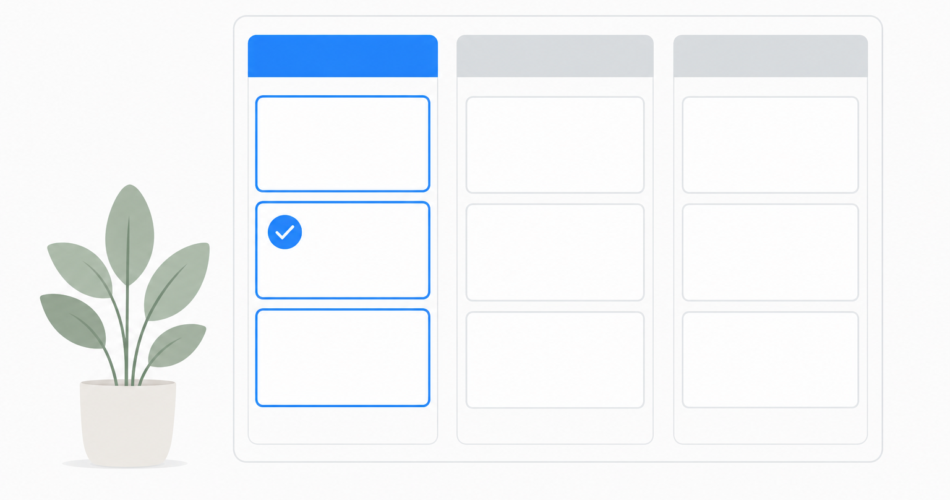
Custom columns let you map the board to the way work actually moves through your team. Instead of forcing tasks into generic stages, you name each column after a real step in your process.
For a creative agency, that might look like:
- Briefing (gathering requirements)
- Draft (internal work in progress)
- Client Review (waiting on external feedback)
- Revisions (implementing requested changes)
- Approved (ready to deliver)
- Invoiced (payment submitted)
For a software team, the columns might be Backlog, In Development, Code Review, QA Testing, Staging, Production.
The specific names matter less than the principle: each column represents a distinct state with a clear owner and a clear next action.
How Custom Columns Eliminate Bottlenecks
When your columns match your workflow, bottlenecks become visible. If twelve tasks pile up in Client Review, you know exactly where the delay is happening. You don’t need to dig through task descriptions or ping teammates for updates.
You can also see who owns the next move. A task in Draft belongs to your team. A task in Client Review belongs to the client. A task in Revisions is back with your team. The column itself assigns accountability.
This clarity speeds up handoffs. Team members know when to move a card forward and when to wait. There’s no ambiguity about whether a task is “done enough” to advance to the next stage.
Setting Up Columns in Any.do
Any.do lets you customize kanban columns to match your team’s process. You can add, rename, and reorder columns so the board reflects the actual stages work goes through.
Start by mapping out your current workflow on paper. Identify every handoff point where work changes hands or waits for input. Those transitions become your columns.
Keep column names short and specific. “Waiting on Legal” is clearer than “Pending.” “Ready to Ship” is clearer than “Final.”
You can also assign team members to specific columns if certain stages always involve the same people. That way, everyone knows who to follow up with when a card lands in their column.
When to Add or Remove Columns
Your workflow will change as your team grows or takes on new types of projects. Revisit your columns every few months to make sure they still match reality.
If you notice tasks getting stuck in one column for too long, consider splitting it into smaller stages. If a column rarely has more than one or two cards, it might not need to exist as a separate stage.
The goal isn’t to create the perfect board on day one. It’s to build a board that makes bottlenecks obvious and handoffs smooth.
Your Board Should Tell the Story of Your Work
A kanban board is only useful if it reflects how work actually moves through your team. Generic columns hide the real story. Custom columns that match your handoff points make delays visible, assign clear ownership, and eliminate the constant status-check interruptions that slow everyone down.
Take ten minutes to map your workflow. Identify the stages where work changes hands or waits for approval. Then rename your columns to match those stages. Your team will spend less time asking where things stand and more time moving work forward.