
Why Task Management for Real Estate Agents Is Uniquely Complex
Task management for real estate agents is not a general productivity problem. It is a specific operational challenge that combines the deadline pressure of a legal transaction, the relationship demands of a service business, and the pipeline management of a sales role, all at the same time, across multiple active clients who each believe they are your only priority. A busy agent might be nurturing six leads, actively working three buyers, managing two listings, and navigating one transaction in escrow simultaneously. Each of those requires a different set of tasks, each has its own timeline, and many of the deadlines are contractually binding. A missed contingency removal date or a late disclosure package is not just an inconvenience. It can kill a deal or expose the agent to liability.
The real estate productivity app question matters because the stakes of a dropped task are unusually high. A salesperson who misses a follow-up loses a deal. A real estate agent who misses an inspection contingency deadline can lose a deal, their commission, and their client’s trust in a single morning. The system has to be reliable, not just convenient.
The Three Layers of a Real Estate Agent’s Task List
Before building a system, it helps to understand that a real estate agent’s tasks fall into three distinct layers, each with different urgency profiles and planning horizons.
Transaction tasks: deadline-driven and non-negotiable
These are the tasks tied to active transactions moving through escrow or contract. Inspection contingency removal dates. Loan contingency removal dates. Appraisal deadlines. Disclosure delivery windows. Repair request deadlines. Closing preparation tasks. Wire transfer confirmations. Every active transaction has a timeline of contractually defined milestones, and every milestone has a task that needs to be completed, communicated, or coordinated on or before the deadline.
Transaction tasks are the highest-stakes items in the real estate task list. They cannot be deferred or forgotten. In Any.do, each active transaction should have its own dedicated list, named by address or client name, with every upcoming deadline entered as a task with its exact due date as soon as the contract is executed. Do not wait to see how the transaction develops. Get every milestone on the list from day one so nothing sneaks up on you.
Client tasks: relationship-driven and time-sensitive
These are the tasks that keep clients informed, trusted, and moving forward. Scheduled showing follow-up calls after touring homes. Weekly listing updates for sellers. Market analysis updates for buyers waiting for the right property. Check-ins with pending clients to confirm financing progress. Referral thank-you notes after a closing. These tasks do not have hard contractual deadlines, but letting them slip damages client relationships and referral pipelines that are the foundation of a long real estate career.
Client tasks live in Any.do with specific due dates set at the moment the commitment is made. When a buyer says “let us know if anything new hits the market in our price range this week,” that becomes a Friday task: “Send new listings to the Chen family.” When a listing presentation goes well and the sellers say they will decide by Thursday, that becomes a Thursday task: “Follow up with Garcias on listing decision.” No commitment lives in memory. Every commitment lives in the system.
Business development tasks: important but never urgent
These are the tasks that build the future pipeline: sphere of influence outreach, past client anniversary calls, open house follow-ups, social media posts, community involvement, and anything else that generates leads over a twelve-to-twenty-four-month horizon. Business development tasks are the ones most likely to be perpetually deferred because they never have an immediate deadline. They can always wait until the active transactions are calmer, which means they wait indefinitely, and the pipeline that should be filling up for next year never does.
Treating business development as genuinely important work, not just a nice-to-have, is the habit that separates agents who are constantly stressed about where the next deal is coming from and agents who have a steady pipeline. In Any.do, business development tasks get specific due dates even when there is no external deadline. “Call past clients from three years ago for check-in” is a task with a date on the calendar, not a vague intention that might happen someday.
Structuring Any.do for a Real Estate Practice
One list per active transaction
Create a dedicated Any.do list for every transaction the moment a contract is signed. Name it by address: “123 Maple St — Sellers” or “Johnson Buyers — Elm Ave Offer.” Inside that list, enter every transaction milestone from the contract timeline as a task with the exact date. Add tasks as they arise during the transaction: “Schedule home inspection,” “Order natural hazard disclosure,” “Confirm buyer’s loan status with lender,” “Send walkthrough reminder to clients.”
When the transaction closes, archive the list. Active transactions are always visible as separate lists in the sidebar. The transaction is never an anonymous task in a generic “work” list. It has its own dedicated space where every open item is visible at a glance.
One list for each active client relationship
For buyers and sellers who are not yet in transaction but are actively working with you, maintain a client list. “Chen Family — Buyers” holds all the tasks related to their home search: properties to send, follow-up calls, market updates, pre-approval check-ins, and showing schedules. “Garcia Listing” holds the pre-listing tasks: photography scheduling, staging coordination, HOA document requests, comparative market analysis preparation.
Client lists are distinct from transaction lists because the work is different. Pre-transaction client work is relationship and preparation work. Transaction work is deadline-driven execution. Keeping them in separate lists prevents the preparation tasks from being buried under the urgency of transaction deadlines.
One list for business development and lead nurturing
All business development tasks live in one list: sphere of influence calls, past client check-ins, open house lead follow-ups, networking events, and marketing tasks. This list does not have the urgency of transactions, but it has strategic importance that deserves its own dedicated home rather than being scattered across a generic task inbox.
The Daily Real Estate Agent Workflow
Morning: transaction deadlines first
Open Any.do’s daily planner view at the start of each day. Tasks from all lists surface here in a single unified view alongside your calendar. Transaction deadline tasks should be completed first, before client calls, showings, or business development. The most important work comes first, and in real estate, the most important work is whatever has a contractual deadline today.
After transaction deadlines, work through client follow-up tasks. Client relationships are the source of referrals and repeat business, and every promised follow-up that does not happen is a relationship cost that accumulates quietly over time.
Time-block showing prep and administrative work
Showings, listing appointments, and open houses are calendar events with fixed times. The preparation tasks that surround them should be time-blocked the same way. Preparing a buyer package for a showing tour, printing disclosures before a listing presentation, or ordering sign installation for a new listing are all tasks with natural lead times that require calendar-adjacent planning.
Time-blocking preparation tasks into the calendar before appointments means the prep happens when it should, not in a scramble the morning of. Any.do’s calendar integration shows your scheduled showings and appointments alongside your task list so you can plan the prep work around the actual time available in your day.
Capture every commitment during client interactions
Real estate client conversations generate commitments constantly. A showing generates “send comps for 45 Oak Street” and “check on HOA fees before Sunday.” A listing call generates “get stager contact info for Petersons” and “confirm photographer availability for Tuesday.” These commitments need to be in Any.do within thirty seconds of being made, not reconstructed from memory at the end of a twelve-hour day when three showings and two calls have happened since the original conversation.
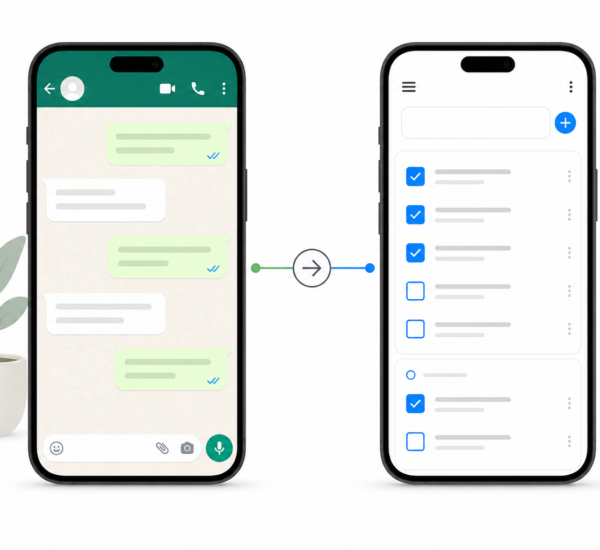
The Any.do mobile app makes in-the-moment capture fast. Add the task immediately after the call or during the brief moment between appointments. The specific context, the client name, the deadline, the exact deliverable, captures while it is fresh. By evening, every commitment made during the day is in the system with a due date.
End-of-day transaction review
Before closing the day, spend five minutes on a transaction review. Open each active transaction list and confirm that nothing is due in the next twenty-four to forty-eight hours that has not been actioned. Check that any deadlines from today’s communications have been entered as tasks. Confirm that tomorrow’s calendar has the tasks it needs alongside the appointments already on it.
This end-of-day review is the safety net that catches anything that slipped through during a busy day. A transaction that has a repair request deadline in thirty-six hours that was added to the contract two weeks ago and not yet entered as a task gets caught here, not discovered at 8am the morning it is due.
Managing the Long-Term Pipeline Without Letting It Drift
Real estate has a longer lead nurturing cycle than most businesses. A couple who attended an open house six months ago and was not ready to buy is potentially a transaction in the next twelve months if the relationship is maintained. A past client whose home you sold four years ago is statistically likely to move again and to refer friends if they remembered the experience positively.
These long-horizon relationships require systematic follow-up, not just good intentions. In Any.do, past client check-ins and sphere of influence outreach should be recurring tasks. The past client who closed eighteen months ago gets a recurring check-in task every six months. The open house lead who was not ready but asked to stay in touch gets a follow-up task set for ninety days out. These tasks surface on schedule, require the agent to make a deliberate choice about whether to act or reschedule, and prevent the long-term pipeline from becoming invisible until it is too late to work it.
Real Estate Productivity Is a System Problem, Not a Time Problem
Most real estate agents who feel overwhelmed are not short on time. They are short on system. The transactions, clients, and leads are manageable at any reasonable volume. What is not manageable is tracking all of them through memory, scattered notes, and a CRM that records history but does not surface today’s actions.
A task management system for real estate agents does three things: it captures every commitment at the moment it is made, it surfaces the right actions on the right day, and it gives every transaction and client relationship a dedicated home where nothing is lost. Any.do covers all three through the combination of the daily planner view, mobile capture, and a list structure that maps to the way real estate work is actually organized.
If you want a real estate productivity app that keeps your transactions, client relationships, and pipeline development organized in one daily-planning view, Any.do is free to get started. The list structure, calendar integration, and mobile app give you the system that keeps every closing on track and every client relationship maintained without relying on memory to carry the load.