
You sit down with your to-do list. It has twenty-three items. Every one of them feels like it should be done today. You stare at it, feel a small wave of dread, and – because choosing is hard – you start with whatever’s easiest or loudest. By evening, the list is somehow longer.
This is the prioritization problem, and it’s almost never a problem of laziness. It’s a problem of decision-making. When everything looks equally important, your brain has no basis for choosing, so it defaults to urgency, ease, or whoever asked most recently.
The fix isn’t working harder. It’s having a method for deciding. This guide walks through six proven prioritization methods, how to pick the right one for your situation, and how to turn your priorities into a day you can actually finish.
Why prioritization feels impossible
Before the methods, it helps to understand why this is genuinely hard:
- Urgency hijacks importance. Urgent things feel important because they’re loud. A ringing phone beats a quiet, important project every time – even when the project matters more.
- *Everything has a cost of not doing it.* Every task has some consequence attached, so every task can be argued as a priority. Without a method, that argument never ends.
- Choosing means letting go. Prioritizing one task means consciously not doing others right now. That feels like loss, so we avoid the choice by trying to do everything – and do it all badly.
- The list mixes sizes and types. “Reply to email” and “write the annual plan” sit on the same list looking equal. They are not.
A prioritization method works by replacing this fuzzy, emotional judgment with a clear, repeatable rule.
6 proven methods to prioritize your tasks
1. The Eisenhower Matrix – for sorting urgent from important
Sort every task into four boxes by two questions: is it urgent, and is it important? Do the urgent-and-important now, schedule the important-but-not-urgent, delegate the urgent-but-unimportant, and delete the rest.
Use it when: your core problem is too many competing tasks and you can’t tell which deserve your attention. It’s the best tool for breaking the urgency trap.
2. Eat the Frog – for beating procrastination
Attributed to a Mark Twain line about eating a live frog first thing so the worst part of your day is behind you. The method: identify your single most important (and often most dreaded) task, and do it first, before anything else.
Use it when: you keep avoiding one big, important task while busying yourself with small ones. It removes the all-day low-grade dread of an unfinished hard thing.
3. The 1-3-5 Rule – for building a realistic daily list
Accept that you can’t do everything, then deliberately plan: one big task, three medium tasks, five small ones. Nine items, sized honestly. That’s your day.
Use it when: your lists are unrealistically long and you end most days feeling behind. The 1-3-5 rule builds in honesty about capacity.
4. The ABCDE Method – for ranking a long list
Go through your list and label every task: A (must do, serious consequences), B (should do, mild consequences), C (nice to do, no consequences), D (delegate), E (eliminate). Then do all your A tasks before any B, all B before any C.
Use it when: you have a long list and need a fast way to rank everything top to bottom.
5. The MoSCoW Method – for scoping projects
Sort tasks or features into Must have, Should have, Could have, and Won’t have (this time). Common in project planning when you need to agree on scope.
Use it when: you’re planning a project or release and need to decide what’s in and what’s out.
6. Most Important Tasks (MITs) – for daily focus
Each morning, before anything else, choose two or three Most Important Tasks. If you finish only those, the day was a success. Everything else is a bonus.
Use it when: you want a lightweight daily habit and the Eisenhower Matrix feels like too much structure.
How to choose the right method for your situation
Don’t adopt all six. Match the method to the problem you actually have:
- “I can’t tell what matters.” → Eisenhower Matrix.
- “I keep avoiding one hard thing.” → Eat the Frog.
- “My list is always too long.” → 1-3-5 Rule.
- “I need to rank a big list fast.” → ABCDE Method.
- “I’m scoping a project.” → MoSCoW.
- “I just want a simple daily habit.” → Most Important Tasks.
Many people combine two: use the Eisenhower Matrix or ABCDE to decide what’s important, then Eat the Frog to decide which one to start. Pick one primary method, use it for two weeks, and only then judge whether it fits.
Turning priorities into a daily plan
Prioritizing is only half the job. A ranked list still isn’t a plan – a plan answers when. To close the gap:
- Pick your top tasks first thing. Decide your priorities before the day’s noise starts, not in reaction to it.
- Match tasks to your energy. Put your most important, hardest task in your peak-focus window – for most people, the morning. Save low-energy admin for the afternoon dip.
- Give important tasks a time slot. A priority with no scheduled time competes with everything else and usually loses. Block time on your calendar for your top tasks – this is time blocking, and it’s what makes a priority real.
- Protect the plan from interruptions. When something new arrives, don’t just absorb it. Run it through your method: is it more important than what you’d drop for it? Usually it isn’t.
- Review at day’s end. What got done, what didn’t, what carries over. This five-minute habit makes tomorrow’s prioritization faster and more honest.
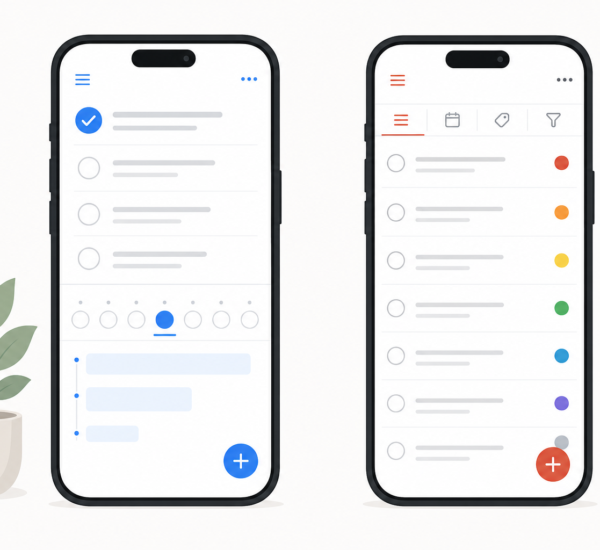
A task app helps here by keeping the two halves together. In Any.do, you can prioritize with color tags or priority levels, then drag your top tasks straight into your calendar view – so your priorities and your schedule live in one place, and “important” turns into “scheduled.”
Frequently asked questions
How do I prioritize tasks when everything feels important?
Use a prioritization method to replace gut feeling with a clear rule. The Eisenhower Matrix is the best starting point: sort each task by urgency and importance, then do, schedule, delegate, or delete it. A method works because it gives your brain an objective basis for choosing.
What is the best task prioritization method?
There’s no single best method – it depends on your problem. Use the Eisenhower Matrix when you can’t tell what matters, Eat the Frog when you procrastinate on big tasks, and the 1-3-5 Rule when your lists are unrealistically long.
What’s the difference between urgent and important tasks?
Urgent tasks demand attention now (a deadline, a ringing phone). Important tasks contribute to your long-term goals and values. They often aren’t the same – and confusing the two is the single biggest cause of poor prioritization.
How many tasks should I plan for one day?
Be realistic. The 1-3-5 rule suggests one big task, three medium, and five small. Many productivity experts recommend choosing just two or three Most Important Tasks and treating anything beyond that as a bonus.
How do I stop interruptions from derailing my priorities?
When something new arrives, don’t absorb it automatically. Run it through your prioritization method and ask whether it’s genuinely more important than what you’d have to drop. Most interruptions aren’t – they just feel urgent.