
A to-do list tells you what to do. It says nothing about when – or whether there’s even time to do it all. That’s the quiet flaw in the humble list: it lets you write down twelve hours of intentions for an eight-hour day and feel organized doing it.
Time blocking fixes that. It takes your tasks off the list and puts them onto your calendar as specific appointments with yourself. Instead of a list you hope to get through, you have a plan you can actually see – and a plan that’s honest about how much time you really have.
This guide explains what time blocking is, how to do it, how to handle the inevitable interruptions, and how to set it up so it works.
What time blocking is – and why a list isn’t enough
Time blocking is the practice of dividing your day into blocks of time and assigning a specific task or type of work to each block. Rather than working from an open-ended list and reacting to whatever’s loudest, you decide in advance what you’ll do and when.
A plain to-do list has three weaknesses time blocking solves:
- It hides the time problem. A list of fifteen tasks looks the same whether it’s two hours of work or twelve. A calendar can’t lie – when the blocks are full, the day is full.
- It invites reactive work. With only a list, you’re constantly re-deciding what to do next, and that decision usually goes to whatever’s urgent or easy. A blocked calendar makes the decision once, in advance.
- It ignores focus. A list treats “write the report” and “answer three emails” as equal line items. Time blocking lets you protect a real, uninterrupted stretch for deep work.
Time blocking doesn’t replace your to-do list – it’s where the list goes to become a plan.
Time blocking vs related methods
A few related techniques are often confused:
- Time blocking – assigning specific tasks to specific time slots on your calendar.
- Task batching – grouping similar small tasks (all your emails, all your calls) into one block so you’re not constantly switching context. Batching is often used inside a time block.
- Day theming – dedicating whole days to one type of work (Mondays for planning, Tuesdays for meetings). Useful when your role has very distinct modes of work.
You don’t have to choose. Many people time-block their day and use batching within blocks for small tasks.
How to time block your day: a step-by-step guide
- List your tasks first. Time blocking works on top of a clear task list. Start with everything you need to do, ideally already prioritized.
- Estimate how long each task really takes. Be honest, and add a buffer. Most people underestimate – if you think it’s 30 minutes, it’s often 45.
- Know your energy pattern. Identify your peak-focus window (for most people, the morning) and your low-energy dip (often early afternoon).
- Block your most important task into your peak window. Put your hardest, highest-priority work where your focus is strongest. Protect that block.
- Block in everything else – including the non-work. Meetings, admin, breaks, lunch, commute, exercise. If it takes time, it gets a block. A schedule that ignores breaks isn’t realistic.
- Batch small tasks into dedicated blocks. Don’t scatter email and messages across the day. Give them one or two defined windows.
- Leave buffer blocks. Deliberately leave 20–30% of your day unblocked. This is not wasted time – it’s the space that absorbs overruns and the unexpected. A 100%-blocked day breaks at the first surprise.
- Review and adjust at day’s end. See what overran, what got skipped, and carry it into tomorrow’s blocks. Your time estimates get sharper every week.
How to handle interruptions and overruns
The most common reason people abandon time blocking is that “the plan never survives.” It doesn’t have to. Here’s how to make it resilient:
Build in buffer. This is the big one. If your day is blocked at 100%, a single delay collapses the whole thing. Blocking only 70–80% means the plan bends instead of breaking.
Treat overruns as data, not failure. A task that ran 45 minutes when you blocked 30 isn’t a failure – it’s a corrected estimate. Update tomorrow’s block. Time blocking gets more accurate with practice precisely because it surfaces these gaps.
Have a “catch-up” block. A spare block late in the day, deliberately left empty, catches whatever slipped earlier.
Protect deep-work blocks; flex the rest. Your one important focus block should be defended hard. The admin and small-task blocks can move around it freely.
Re-block, don’t abandon. When the day goes sideways, take 60 seconds to re-block the remaining hours. A revised plan beats reverting to reactive chaos.
Time blocking with tasks and calendar in one place
Time blocking has a practical catch: your tasks live in one app and your calendar lives in another, so blocking time means constantly copying tasks across – and the two views never quite agree.
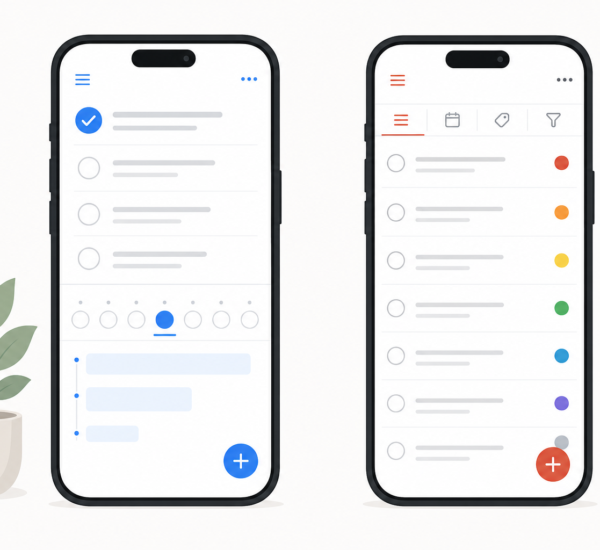
The technique works far better when tasks and calendar share a single view. When you can see your to-do list and your calendar together, time blocking becomes a simple drag: pull a task from the list onto a time slot, and it’s blocked.
This is exactly what Any.do is built for – tasks and calendar in one unified view. You plan your day by dragging tasks directly onto your calendar, your scheduled blocks and your appointments sit side by side, and the “My Day” ritual helps you decide what to block in the first place. There’s no copying between apps and no two-views-disagreeing problem.
A simple time blocking template
A basic template for a standard day looks like this – adapt the hours to your own rhythm:
- First 30 min – Plan the day, review tasks, set blocks.
- Peak-focus block (90 min) – Your single most important task. No interruptions.
- Short break (15 min) – Step away from the screen.
- Second focus block (60–90 min) – Important task two.
- Lunch (45–60 min) – A real break, blocked deliberately.
- Batch block (45 min) – Email, messages, small admin – all together.
- Afternoon block (60 min) – Lower-energy or routine work.
- Buffer / catch-up block (30–45 min) – Absorbs overruns and surprises.
- Last 15 min – Review the day, carry over what slipped, block tomorrow’s top task.
Roughly 70–80% of the day is committed; the rest is breathing room.
Frequently asked questions
What is time blocking?
Time blocking is a planning method where you divide your day into blocks of time and assign a specific task or type of work to each one. Instead of working from an open-ended to-do list, you schedule your tasks as appointments on your calendar.
How is time blocking different from a to-do list?
A to-do list tells you what to do but not when, and it hides whether you even have enough time. Time blocking turns the list into a schedule by giving each task a specific slot on your calendar – making the plan realistic and reducing constant re-deciding.
How much of my day should I block?
Block about 70–80% of your day, not 100%. The remaining 20–30% is buffer that absorbs overruns, interruptions, and the unexpected. A fully blocked day collapses at the first surprise.
What should I do when an interruption breaks my time blocks?
Don’t abandon the plan – re-block. Take a minute to reassign the remaining hours of the day. Build in buffer blocks and a late-day catch-up block so the schedule can bend instead of break, and treat overruns as corrected estimates for next time.
What’s the best tool for time blocking?
Time blocking works best in a tool where tasks and calendar share one view, so you can drag a task straight onto a time slot. Apps like Any.do combine tasks and calendar in a single view, removing the need to copy tasks between separate apps.
Is time blocking good for people who get interrupted a lot?
Yes, if you build in enough buffer. Block only 70–80% of your day, protect one important focus block hard, and keep the rest of your blocks flexible. The buffer is what makes time blocking survive a high-interruption day.