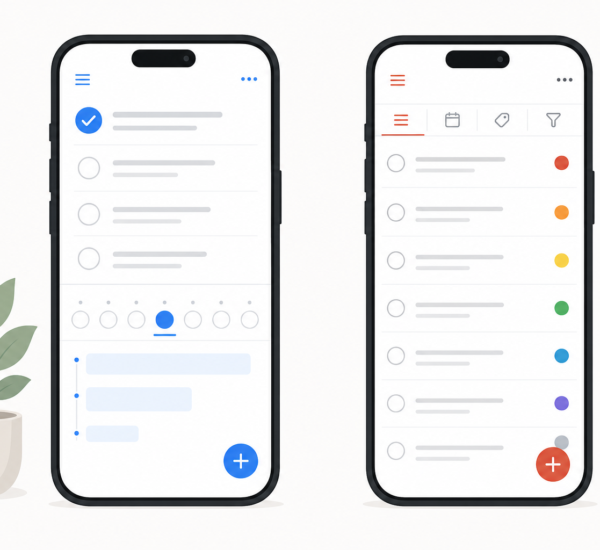
Kanban boards have revolutionized the way we visualize work. From Toyota’s manufacturing floors in the 1940s to your smartphone today, this simple yet powerful methodology has proven its worth across every imaginable context. Whether you’re managing a product launch with a distributed team or organizing your personal side projects, the right Kanban app can transform chaos into clarity.
But here’s the challenge: the market is flooded with Kanban apps, each claiming to be the best. Some are designed for enterprise teams with complex workflows. Others focus on individual productivity. Many try to do both and end up doing neither particularly well.
This guide cuts through the noise. We’ve evaluated the best Kanban apps available in 2026, examining them through two critical lenses: personal use and team collaboration. You’ll discover which tools excel in each category, what makes them stand out, and most importantly, which one is right for your specific needs.
What Makes a Great Kanban App?
Before we dive into specific tools, let’s establish what separates excellent Kanban apps from mediocre ones.
Visual clarity is non-negotiable. The entire point of Kanban is visualizing your workflow at a glance. Great apps make this effortless with clean interfaces, intuitive layouts, and customizable views that adapt to how you think.
Flexibility without complexity. The best Kanban apps scale with your needs. They’re simple enough for personal grocery lists yet powerful enough for product development cycles. This balance is rare and valuable.
Cross-platform consistency. Your work doesn’t stop when you close your laptop. Great apps deliver seamless experiences across web, mobile, and desktop, with reliable sync that actually works.
Speed matters. Laggy interfaces kill productivity. The best apps respond instantly to your actions, keeping you in flow state rather than waiting for spinners.
The right level of collaboration. For personal apps, this means staying out of your way. For team apps, it means real-time updates, clear ownership, and communication features that enhance rather than interrupt work.
Best Kanban Apps for Personal Use
Personal Kanban is about creating systems that work for one brain—yours. These apps understand that individual productivity needs differ from team collaboration.
1. Any.do: The Perfect Balance
Any.do has mastered something few productivity apps achieve: it’s genuinely useful for both personal tasks and professional projects without feeling compromised in either direction.
Why it excels for personal use: The interface is beautifully minimal, removing every ounce of friction between thought and action. You can capture tasks instantly via voice input, organize them into Kanban boards, and switch seamlessly between list, board, and calendar views depending on how you want to work that day.
What sets Any.do apart is how it respects your cognitive load. The app doesn’t overwhelm you with options or demand you make decisions about project structures before you’ve even added your first task. It adapts to your natural workflow rather than imposing rigid methodologies.
Standout features:
- Kanban board view that’s clean and distraction-free
- Intelligent task parsing (type “call mom tomorrow at 3pm” and it creates the task with proper scheduling)
- Calendar integration that lets you time-block directly from your Kanban board
- Location-based reminders for tasks that need to happen in specific places
- Voice entry for frictionless task capture
- Daily planning feature that helps you prioritize each morning
- Cross-platform sync that actually works reliably
Perfect for: Knowledge workers who need to manage both personal and professional tasks, anyone who thinks visually but needs flexibility, people who work across multiple devices throughout the day, and those who want room to grow from personal use into team collaboration without switching tools.
Pricing: Generous free tier for personal use, with premium features available at reasonable subscription rates.
2. Trello: The Visual Thinking Canvas
Trello pioneered the digital Kanban board, and its influence is visible in virtually every tool that came after. For personal use, it offers an incredibly flexible canvas for organizing anything from vacation planning to writing projects.
Why it excels for personal use: Trello’s power-ups and integrations transform it into whatever you need. Planning a home renovation? Add a calendar power-up. Managing a content pipeline? Integrate with Google Drive. The board metaphor is so intuitive that you can share it with less tech-savvy family members without explanation.
Standout features:
- Unlimited personal boards on the free plan
- Butler automation for recurring tasks
- Custom backgrounds for visual board differentiation
- Card aging to highlight stagnant tasks
- Extensive template library for common use cases
- Power-ups that extend functionality endlessly
Perfect for: Visual thinkers who want ultimate customization, people managing diverse project types, those who benefit from extensive integrations, and anyone wanting a tool that can grow arbitrarily complex.
Pricing: Free plan is generous for personal use, paid plans add more power-ups and features.
3. Notion: The All-in-One Workspace
Notion isn’t exclusively a Kanban app—it’s a workspace that can become whatever you need, including an excellent Kanban system. For personal use, this flexibility is both its greatest strength and potential weakness.
Why it excels for personal use: If you’re someone who wants everything in one place—notes, tasks, databases, wikis, and Kanban boards—Notion delivers. You can create interconnected systems where your Kanban board pulls from the same database as your content calendar and project tracker.
Standout features:
- Database-powered Kanban boards with unlimited filtering and sorting
- Multiple views of the same data (Kanban, table, calendar, gallery)
- Rich content support within cards (embed anything)
- Template gallery for quick starts
- Web clipper for capturing inspiration
- Offline access on mobile
Perfect for: People who love building systems, those managing knowledge-heavy projects, students organizing research and coursework, and anyone who wants to centralize their entire digital life.
Pricing: Free for personal use with generous limits, paid plans for teams.
4. MeisterTask: Elegant Simplicity
MeisterTask focuses on delivering beautiful, intuitive Kanban boards without overwhelming you with options. It’s Kanban done right—nothing more, nothing less.
Why it excels for personal use: The interface is gorgeous and distraction-free. MeisterTask respects your attention, providing exactly the features you need for personal task management without enterprise bloat. The mind mapping integration with MindMeister is brilliant for planning projects before executing them.
Standout features:
- Clean, modern interface focused on tasks
- Built-in time tracking
- Recurring tasks handled elegantly
- Section collapse for hiding completed work
- Beautiful mobile apps
- Integration with MindMeister for project planning
Perfect for: Minimalists who want beauty and function, creative professionals organizing projects, people who think in mind maps, and those seeking a middle ground between simplicity and power.
Pricing: Free plan covers basic personal use well, affordable pro plan for power features.
Best Kanban Apps for Team Use
Team Kanban introduces different requirements: real-time collaboration, clear ownership, permission management, and communication features that keep everyone aligned without constant meetings.
1. Any.do: Scaling From Personal to Team
Here’s where Any.do’s dual nature shines brightest. It’s one of the rare tools that genuinely excels at both personal productivity and team collaboration without feeling like a compromise.
Why it excels for team use: Any.do understands that great team tools must respect individual workflows. Team members can maintain their personal task views while collaborating on shared boards. The transition from “my work” to “our work” is seamless—no context switching, no separate apps.
Real-time collaboration works beautifully without the notification overload that plagues many team tools. You see updates when relevant, not every time someone adds a comma to a task description. The mobile apps are particularly strong, recognizing that modern teams work from everywhere.
Standout features:
- Shared Kanban boards with real-time updates
- Task assignment with clear ownership
- Team calendar for coordinating work
- Activity feed showing who did what
- File attachments on tasks
- Comments and discussions within tasks
- Subtasks for breaking down complex work
- Cross-platform consistency (everyone gets the same excellent experience)
- Gentle notification system that informs without overwhelming
Perfect for: Remote teams needing mobile-first collaboration, small to medium businesses wanting to avoid enterprise complexity, agencies juggling multiple client projects, teams who want members to maintain personal productivity alongside collaborative work.
Pricing: Team plans are affordable and scale reasonably as you grow.
2. Asana: The Team Coordination Powerhouse
Asana has evolved into a comprehensive work management platform, but its Kanban board view remains excellent for teams visualizing their workflow. It’s built specifically for team coordination at scale.
Why it excels for team use: Asana’s strength lies in how it connects individual tasks to larger goals and initiatives. You can visualize work as a Kanban board while managers track progress through timeline views and dashboards. The permissions system is robust enough for complex organizational structures.
Standout features:
- Multiple project views (board, list, timeline, calendar)
- Advanced search and filtering across all projects
- Portfolio management for tracking multiple initiatives
- Workload view for capacity planning
- Forms for standardizing intake requests
- Extensive automation rules
- Detailed reporting and analytics
- Integration with virtually every business tool
Perfect for: Growing companies establishing processes, marketing teams managing campaigns, product teams coordinating releases, and organizations needing audit trails and reporting.
Pricing: Free tier for small teams (up to 15 members), paid plans unlock advanced features.
3. Monday.com: The Visual Workflow Platform
Monday.com approaches Kanban as one view within a broader work operating system. For teams who think visually and want flexibility in how they organize work, it’s compelling.
Why it excels for team use: The platform is highly visual and customizable without requiring technical skills. Teams can start with Kanban boards and add other views as needs evolve. The automation capabilities are particularly strong, reducing manual status updates and handoffs.
Standout features:
- Kanban view with extensive customization
- Time tracking built-in
- Automation recipes for common workflows
- Multiple board views (Kanban, Gantt, calendar, map)
- Guest access for external collaborators
- Dashboard creation for stakeholder updates
- Mobile apps with offline capabilities
Perfect for: Teams wanting customization without coding, creative agencies, operations teams standardizing processes, and organizations with diverse project types.
Pricing: Starts at reasonable per-user rates, scales with features and team size.
4. ClickUp: Maximum Flexibility
ClickUp attempts to be everything to everyone—and for teams who want ultimate customization, it largely succeeds. Its Kanban board view is one of many ways to visualize work.
Why it excels for team use: If your team has specific workflow needs that don’t fit standard tools, ClickUp probably accommodates them. The customization options are nearly endless, allowing teams to configure exactly the workspace they need.
Standout features:
- Highly customizable Kanban boards
- Multiple views of every project
- Built-in docs and wikis
- Time tracking and estimation
- Goal tracking with measurable targets
- Extensive automation
- Mind mapping
- Custom fields and task types
Perfect for: Tech-savvy teams comfortable with configuration, agencies with diverse client needs, teams consolidating multiple tools, and power users who want total control.
Pricing: Free tier with surprising features, paid plans unlock advanced capabilities.
5. Jira: Built for Software Teams
Jira deserves mention specifically for software development teams. While it’s not the simplest Kanban tool, it’s purpose-built for agile development workflows.
Why it excels for team use: Jira integrates deeply with development workflows—code repositories, CI/CD pipelines, deployment tracking. For engineering teams, this integration is invaluable. The Kanban board is just one view into work that connects to sprints, epics, and releases.
Standout features:
- Sophisticated issue tracking
- Integration with development tools (GitHub, Bitbucket, etc.)
- Advanced workflow customization
- Sprint planning and tracking
- Release management
- Detailed reporting and burndown charts
- Roadmap visualization
Perfect for: Software development teams, technical project managers, DevOps teams, and organizations practicing formal agile methodologies.
Pricing: Free for up to 10 users, paid plans for larger teams and advanced features.
Hybrid Heroes: Apps That Excel at Both
Some apps genuinely serve both personal and team use cases exceptionally well. Here’s what makes them special.
Any.do: The Rare Dual Excellence
Most tools optimize for either personal productivity or team collaboration. Any.do is remarkable because it excels at both without feeling compromised.
The personal experience is clean, fast, and respectful of your attention. You can manage your entire life—work tasks, personal projects, habits, shopping lists—in an interface that never feels cluttered.
The team experience builds naturally from personal use. Inviting team members, creating shared boards, and collaborating on tasks feels like a natural extension rather than switching to “team mode.” Everyone maintains their personal productivity system while collaborating seamlessly on shared work.
This dual nature is valuable in modern work where boundaries between personal and professional blur. You don’t need separate apps for work and life. You don’t force teammates into your personal productivity system. Everything coexists naturally.
Notion: The Customizable Canvas
Notion succeeds at both personal and team use through radical flexibility. Individuals can build exactly the personal productivity system they need. Teams can create shared workspaces with Kanban boards, databases, and documentation.
The learning curve is steeper than Any.do, but the payoff is a unified workspace where personal notes, team projects, company wikis, and Kanban boards coexist and interconnect.
How to Choose Your Kanban App
With so many excellent options, how do you decide? Ask yourself these questions:
Are you choosing for yourself or a team? Personal Kanban apps prioritize simplicity and personal workflow. Team apps emphasize collaboration and coordination. Hybrid apps like Any.do bridge both worlds.
What’s your technical comfort level? Tools like Notion and ClickUp reward configuration time. Tools like Any.do and MeisterTask work beautifully out of the box.
Do you need integrations? If your workflow depends on connecting to other tools, prioritize apps with extensive integration ecosystems. If you prefer standalone simplicity, you have more options.
What’s your budget? Many excellent apps offer generous free tiers. For teams, per-user pricing adds up quickly—compare total cost as you scale.
Mobile or desktop primary? If you work mainly from your phone, prioritize apps with excellent mobile experiences. Any.do, Trello, and Asana all deliver here.
How visual is your thinking? Some people think in boards naturally. Others find lists or timelines more intuitive. Choose apps that offer your preferred view without forcing you into rigid structures.
Getting Started: Your First Kanban Board
Regardless of which app you choose, here’s how to create an effective first board:
Start with three columns. To Do, Doing, Done. That’s it. Resist the urge to create elaborate workflows before you understand your actual process.
Add real tasks. Don’t create example tasks to test the system. Populate it with actual work you need to complete. You’ll discover what you need as you work.
Review regularly. Set a weekly recurring task to review your board. Archive completed work, refine task descriptions, adjust priorities. This habit matters more than choosing the “perfect” tool.
Keep cards actionable. Each card should represent a concrete action you can complete. “Launch marketing campaign” is too vague. “Write three blog post headlines” is actionable.
Limit work in progress. Don’t let your Doing column become a graveyard. Finish work before starting more. This is Kanban’s secret sauce.
The Future of Kanban Apps
The Kanban app market continues evolving. Here are trends worth watching:
AI integration is accelerating. Apps are beginning to suggest task prioritization, estimate completion times, and identify bottlenecks automatically. This intelligence layer makes Kanban boards more powerful without adding complexity.
Offline-first is returning. After years of cloud-only tools, apps are remembering that people work in coffee shops with spotty wifi and airplanes with no connectivity. Better offline experiences are emerging.
Personal-team hybrid is the future. Tools like Any.do demonstrate that false choice between personal and team apps. The best future apps will support both use cases seamlessly.
Simplicity is winning. After a decade of feature bloat, users are gravitating toward focused tools that do fewer things exceptionally well. The lightweight revolution is real.
Your Next Step
The best Kanban app isn’t the one with the most features or the biggest marketing budget. It’s the one you’ll actually use consistently.
For most people, that means starting with a tool that’s simple enough to adopt immediately but powerful enough to grow with your needs. Whether you’re organizing personal projects or coordinating a distributed team, the right Kanban app transforms overwhelming chaos into visual clarity.
Try Any.do if you want something that works beautifully for both personal productivity and team collaboration. Try Trello if you want maximum flexibility and customization. Try Asana if you’re coordinating a larger team with complex dependencies.
But most importantly: start today. Create your first board. Add your tasks. Experience the clarity that comes from visualizing your work.
The perfect productivity system isn’t built overnight—it evolves through consistent use. Your Kanban board will teach you what you actually need from a tool. Trust the process.
Ready to visualize your work? Pick an app and start moving cards. Your future organized self will thank you.