
How you start your morning shapes the rest of your day. That is not a motivational poster cliche. It is backed by research. People who follow a consistent morning routine report less stress, higher productivity, and a greater sense of control over their day.
But building a morning routine is easier said than done. You can read a hundred articles about waking up at 5 AM, cold showers, and journaling. The real challenge is remembering to do it every single day, in the right order, without thinking about it.
That is where a planner app comes in. Not a generic alarm clock. Not a notes app with a list scribbled in it. A dedicated daily planner that walks you through your morning, step by step, with reminders that keep you on track.
Why You Need an App for Your Morning Routine
A morning routine works because it removes decisions. You do not waste mental energy wondering what to do first because the order is already set. But maintaining that order requires consistency, and consistency requires cues.
Paper planners work for some people, but they have two problems: they cannot send you reminders, and they are easy to ignore. An app on your phone, the device that is already in your hand when you wake up, provides the cues exactly when and where you need them.
The best morning routine app does three things. First, it shows you the steps in order so you do not have to remember them. Second, it sends timed reminders so you stay on pace. Third, it integrates with your calendar so you can see what your morning routine feeds into, whether that is a 9 AM meeting, a gym session, or a focused work block.
How to Build a Morning Routine That Sticks
Before choosing an app, you need a routine worth planning. Here is how to build one from scratch.
Start with your non-negotiables. What must happen every morning for you to feel ready for the day? For most people, this includes hygiene (shower, brush teeth), nourishment (breakfast or at least coffee), and a moment of calm (meditation, stretching, or simply sitting without screens). Start with three to five essentials. You can add more later.
Order them by dependency. Put things that need to happen first at the top. You cannot leave for the gym without getting dressed. You cannot take your medication without eating breakfast first (if it requires food). Let the natural sequence guide the order.
Assign realistic times. Time each step once to find out how long it actually takes, not how long you think it takes. Most people underestimate their shower time by 5 minutes and their breakfast time by 10. Use real numbers.
Work backward from your first commitment. If you need to be at your desk by 9 AM and your routine takes 75 minutes, plus 20 minutes of commute, you need to start by 7:25 AM. This gives you a concrete wake-up time based on reality, not aspiration.
Keep it under 90 minutes. Anything longer than 90 minutes starts to feel like a job. The point is to start your day with energy, not to exhaust yourself before work begins.
Example Morning Routines
The minimalist (30 minutes): 6:30 – Wake up, drink water. 6:35 – Stretch or light movement for 5 minutes. 6:40 – Shower and dress. 6:55 – Coffee and review today’s plan in Any.do. 7:00 – Start the day.
The health-focused (60 minutes): 6:00 – Wake up, drink water, take vitamins. 6:05 – 20-minute workout or run. 6:25 – Shower and dress. 6:40 – Healthy breakfast. 6:55 – 5 minutes of meditation or journaling. 7:00 – Review today’s plan in Any.do.
The productive professional (75 minutes): 5:45 – Wake up, drink water. 5:50 – 10-minute meditation. 6:00 – 30 minutes of focused personal project or reading. 6:30 – Exercise for 20 minutes. 6:50 – Shower, dress, breakfast. 7:00 – Review calendar and tasks for the day.
Best Morning Routine Planner Apps
Any.do
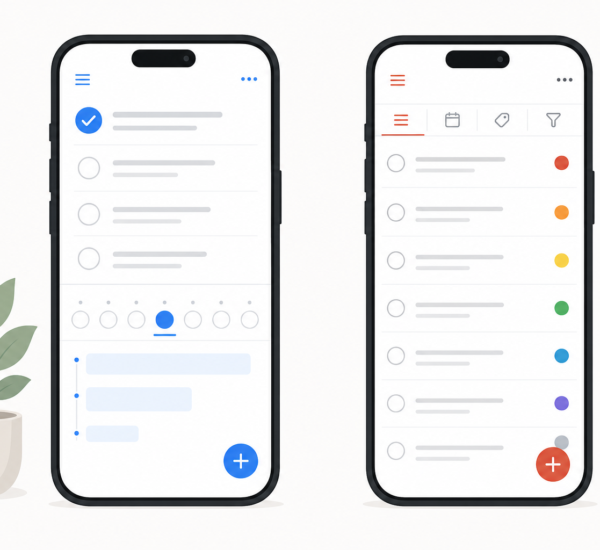
Any.do is ideal for morning routines because it combines your to-do list and calendar in one screen. The My Day feature shows your morning tasks alongside your first meetings and appointments, giving you a complete picture of how your morning flows into your day.
Set up your routine as recurring tasks, each with a timed reminder. “Meditate” at 6:00 AM. “Exercise” at 6:10 AM. “Review today’s plan” at 6:50 AM. Each reminder nudges you to the next step without requiring you to watch the clock.
Any.do’s voice input makes it easy to add tasks even while you are mid-routine. If you remember something during your morning coffee, say it and it is captured.
For more on how Any.do helps with daily planning, check out their guide to the best free AI daily planner app.
Tiimo
Tiimo is built around visual daily timelines. Each routine step appears as a color-coded block on a timeline, making it easy to see what comes next. It was designed with neurodivergent users in mind, so the reminders are gentle and the interface is calm. Tiimo is excellent for people who respond well to visual cues.
Routinery
Routinery turns your routine into a step-by-step timer. Each task has a set duration, and the app moves you through them like a guided workflow. It is especially good for people who lose track of time during specific steps (spending 20 minutes in the shower when you planned 10).
Fabulous
Fabulous takes a behavior-science approach, introducing routine steps gradually over days and weeks. Rather than setting up your ideal routine on day one, you start with one habit (drinking water when you wake up) and add more as each becomes automatic. This approach has a high success rate but requires patience.
Tips for Actually Following Your Morning Routine
Put your phone across the room. When your alarm goes off, you have to get up to turn it off. You are already vertical, which is half the battle.
Prepare the night before. Set out your workout clothes, prepare your coffee maker, and have your breakfast ingredients ready. Removing friction in the morning means fewer excuses.
Do not check your phone first. Email, social media, and news hijack your attention and make you reactive instead of proactive. Complete your routine before you open any apps besides your planner.
Allow one skip day per week. Perfectionism kills habits. Give yourself permission to sleep in one day a week without guilt. Any.do’s recurring tasks will simply reappear the next morning without judgment.
Track your streak, loosely. Noticing that you have followed your routine for 10 days in a row is motivating. Beating yourself up for breaking a streak is destructive. Use tracking as encouragement, not as a report card.
When Your Routine Stops Working
Every routine has a shelf life. Seasons change, work schedules shift, and your body’s needs evolve. If your morning routine starts feeling like a chore instead of a launch pad, it is time to adjust.
Review your routine once a month. Ask: which steps still serve me? Which feel forced? What new habit would I like to add? Keep the routine alive by letting it evolve.
The goal is not to have the perfect morning routine. The goal is to have a good enough routine that you follow most of the time. Consistency beats perfection.
For strategies on protecting your focused work time after your morning routine, check out the Any.do deep work guide.
Conclusion
A morning routine is not about becoming a productivity machine. It is about starting your day with intention instead of reaction. The right planner app turns that intention into action by showing you what to do, when to do it, and what comes next.
Any.do makes this simple. Set your routine as recurring tasks, let the reminders guide you through each step, and use My Day to see how your morning connects to the rest of your schedule.
Your best mornings are not behind you. They are one download away.