What Is the MIT Method?
“Each day, identify the three Most Important Tasks you will accomplish that day. Do them before anything else.” This is the core rule of the MIT productivity method, popularized by Leo Babauta of Zen Habits. The most important tasks method is not a complex system. It is a single daily decision: before the reactive flow of messages, meetings, and minor requests begins, identify the three tasks that matter most today and commit to completing them.
The most important tasks method works because it solves a specific and common failure mode: the day that was busy but not meaningful. The day where you responded to everything, attended every meeting, cleared your inbox, and crossed off a dozen small items, but finished the day without moving anything important forward. The MIT method prevents this outcome by requiring you to name, before the day starts, what “important” actually means today and to give those tasks priority over everything else.
Why Three Tasks and Not One or Ten
The number three is not arbitrary. One task creates rigidity: if the one most important task is blocked or completed early, the day has no further structure. Ten tasks recreate the problem the MIT method is designed to solve. Three is the number that is both ambitious enough to represent a genuinely productive day and constrained enough to force real prioritization.
Three tasks also map well to the structure of a focused workday. A meaningful task typically requires one to three hours of focused work to complete. Three such tasks fit within a realistic workday without requiring heroic output. The constraint is the point. When you can only choose three, you are forced to ask which three matter most, which is exactly the question that most task management systems allow you to avoid by keeping the list as long as possible.
How to Choose Your Most Important Tasks Each Day
Do it the night before, not the morning of
The best time to choose your MIT tasks is the evening before, during your end-of-day review. At that point, you have full context on what happened during the day, what is still unfinished, what is coming tomorrow, and what the larger priorities of the week are. You are choosing with perspective.
In the morning, especially the early morning, that perspective is harder to access. The day’s email has arrived. Notifications have accumulated. Reactive work is already pulling at attention. Choosing your MITs in the morning means making the most important decision of the day under conditions of partial information and divided attention.
The shutdown ritual is the natural context for MIT selection. As part of reviewing what was completed, capturing open items, and planning tomorrow, the final step is choosing the three tasks that, if completed tomorrow, would make the day genuinely successful. Flag them in Any.do as tomorrow’s priorities before closing for the day.
Ask the right question to identify each MIT
The question that identifies a true Most Important Task is not “what is urgent?” It is “what would make tomorrow genuinely successful?” These questions produce different answers. Urgent tasks have deadlines and people waiting. Important tasks move meaningful outcomes forward. The MIT method is explicitly about importance, not urgency, because urgency is already handled by deadlines and will surface regardless of whether you pre-select it.
A useful secondary question is: “If I could only complete one task tomorrow, which one would produce the most meaningful progress?” That task is MIT number one. The second and third MITs follow from the same question applied to the remaining candidates.
Check your MITs against your actual calendar
A most important task that has no time available for it tomorrow is not actually on tomorrow’s agenda. It is on a wish list. Before finalizing your three MITs, open your calendar and confirm that the time exists to complete them. A day with four hours of meetings leaves two to four hours of focused work time. Three tasks requiring a total of six hours of work do not fit in that window.
Checking your MITs against a time-blocked calendar converts them from intentions into scheduled commitments. When you can see that MIT number one has a two-hour block at 9am, MIT number two has a ninety-minute block at 2pm, and MIT number three fits into the gap after lunch, the plan is real. When you have chosen three MITs with no time allocated to any of them, the plan is optimistic.
The MIT Method in Practice
Protect the MITs from the morning reactive pull
The most common failure mode of the MIT productivity method is completing MITs after reactive work rather than before it. Email arrives. Slack messages accumulate. Something urgent comes up. By the time you get to your first MIT, two hours have passed and the focus window has fragmented. The MITs get done in the margins of the day, if at all.
The fix is structural rather than motivational. Block the first focused hours of your workday for MIT work before opening email, messaging apps, or any reactive task. A 9am to 11am focus block, with all notifications off and email client closed, where the first task on the list is MIT number one. The reactive work that accumulates during that window will wait two hours. The focused work that produces your most important outcomes cannot be done in the margins.
What to do when all three MITs are done
The MIT method does not mean stopping work after three tasks. It means that the rest of the day’s work is built on a foundation of three completed important tasks rather than on a pile of completed unimportant ones. After the MITs are done, the remaining work time can be used for the reactive work, administrative tasks, and smaller items that would otherwise crowd out the important work if they ran first.
This is the structural insight at the heart of the MIT productivity method: it reorders the day so that important work claims the best attention and time rather than whatever is left after everything else. The reactive work still gets done. It gets done after the important work, not instead of it.
Handle days when an MIT becomes impossible
Some days a genuine emergency arises that changes what matters most. A client crisis. A critical deadline that moves. An unexpected team situation. On these days, the pre-selected MITs may need to be replaced with a new set that reflects the changed reality.
The response is to treat this as a deliberate re-prioritization, not as the MITs being abandoned. Look at the crisis and ask: given what has happened, what are the three most important things to accomplish today? Select new MITs and proceed. The method is not a rigid commitment to a fixed list. It is a habit of intentional prioritization, and that habit applies as well to an emergency as to a normal day.
The MIT Method and Your Task List
The most important tasks method works alongside a longer task list, not instead of it. The full task list captures everything: active projects, delegated tasks, someday ideas, administrative obligations. The MIT selection draws from that list each evening to identify what tomorrow’s most important three will be.
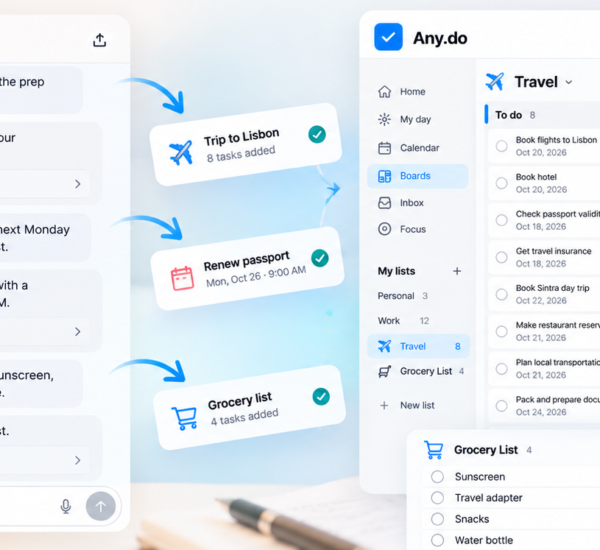
In Any.do, the implementation is direct. Review your full task list at the end of each day. Flag or pin the three most important tasks for tomorrow. The following morning, the daily planner view surfaces those flagged tasks at the top, ready to work on before anything else. The daily priority selection in Any.do is built for exactly this use case: identifying what matters most from a larger list and making it visible at the start of the day.
Why the MIT Method Works When Other Systems Fail
Most productivity systems fail under real-world conditions because they require too much maintenance, generate too much guilt when not followed perfectly, or produce a task list so long that prioritization becomes impossible. The most important tasks method avoids all of these failure modes.
It requires minimal maintenance: one decision per day, taking three to five minutes. It generates minimal guilt: if you complete your three MITs, the day was successful by definition, regardless of how many other tasks remain undone. And it forces prioritization by design: the constraint of three tasks makes it impossible to avoid the question of what actually matters.
The method is also remarkably resilient to imperfect execution. Miss a day of MIT selection? Start fresh tomorrow. Have a day where only one MIT gets completed? That is still one important task that moved forward, which is better than a full day of reactive work with nothing meaningful completed. The MIT method rewards consistency without requiring perfection.
Start Tomorrow Morning With Three Tasks Already Chosen
Tonight, before you close your laptop, open your task list and ask: what three tasks would make tomorrow genuinely successful? Write them down. Flag them in your task system. Check that the time exists on your calendar to complete them. Then close the laptop.
Tomorrow morning, those three tasks are waiting. Before you open email, before you check messages, before the day’s reactive work begins, start on MIT number one. That single structural change, doing the most important work first, compresses more meaningful progress into a normal workday than almost any other productivity practice.
If you want a daily task management and planning system that makes MIT selection, priority flagging, and calendar-aware planning easy, Any.do is free to get started. The daily planner view shows your flagged MITs alongside your calendar so you can see, at a glance, whether tomorrow’s most important tasks have the time they need.