
The Problem With Managing Tasks in Slack
Slack is where work gets discussed. It is not where work gets tracked. The any.do slack integration exists because these two realities constantly collide: someone drops an action item in a channel message, a thread produces three different follow-ups, a direct message carries a commitment you said you would handle, and none of it makes it into your task system. It lives in Slack, where it competes for visibility with everything else, gets buried under new messages, and resurfaces only when the person who asked follows up.
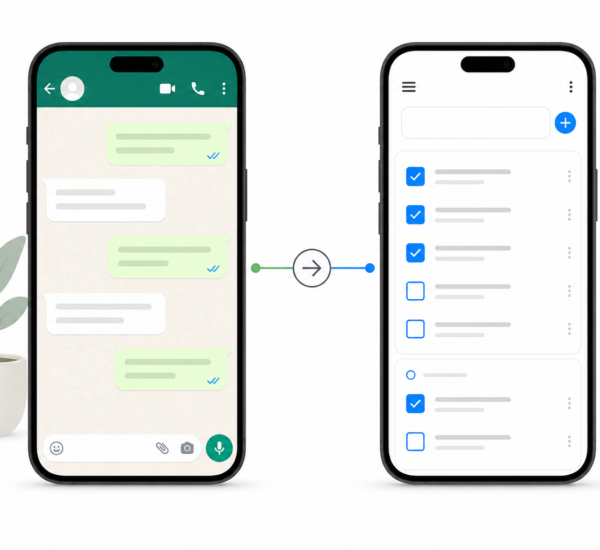
Slack task management integration does not mean turning Slack into a project tracker. It means creating a reliable bridge between the place where requests arrive and the place where you actually track and plan your work. When a message becomes a task in Any.do with a due date and a priority, it is no longer dependent on your memory or on scrolling back through Slack threads to find it. It is in your daily planner, visible alongside your calendar, managed as a real obligation.
How to Set Up Any.do and Slack to Work Together
The Any.do Slack integration works through Zapier, which acts as the connection layer between the two apps. Setup takes about fifteen minutes and runs automatically once configured. No coding required.
Step 1: Set up your accounts
You need an active Any.do account and a Slack workspace where you have permission to add apps. Any.do’s free tier supports the full integration workflow. If your Slack workspace is managed by an IT team that restricts third-party app installations, you may need to request approval before proceeding. Check your workspace settings under Apps to confirm whether external integrations are permitted.
Step 2: Create a Zapier account
Go to zapier.com and sign up for a free account. Zapier’s free tier allows up to 100 tasks per month, which is sufficient for most individual users converting messages to tasks. If you process a high volume of Slack action items daily, the Starter plan removes that limit.
Step 3: Connect Slack to Zapier
In Zapier, add Slack as a connected app. You will be redirected to Slack’s authorization page, where you grant Zapier access to your workspace. Select the workspace you want to connect and complete the authorization. Zapier will confirm the connection is active.
Step 4: Connect Any.do to Zapier
Add Any.do as a second connected app in Zapier. Authorize access using your Any.do credentials. Once connected, Zapier can read from and write to your Any.do lists on your behalf.
Step 5: Create the core automation — starred Slack messages to Any.do tasks
This is the most useful automation in the workflow. In Slack, you can star any message to save it. The automation turns starred messages into Any.do tasks automatically:
- Trigger: New starred message in Slack (in your connected workspace)
- Action: Create a task in Any.do (in a list you designate, such as “Slack Inbox” or “Work”)
- Fields to map: Message text to task title, message permalink to task note (so you can jump back to the full Slack context)
Once this is active, starring a message in Slack creates a task in Any.do within minutes. The workflow in practice: when a message in Slack requires action on your part, star it. The rest happens automatically. Your task list gets the item with a link back to the original message thread.
Step 6: Create an optional second automation — Any.do task completion back to Slack
If you want your team to see when Slack-sourced tasks are completed, a second automation posts a notification to a Slack channel or sends you a DM when you complete a task in Any.do. This is optional and most useful for teams where task visibility matters:
- Trigger: Task completed in Any.do (in your “Slack Inbox” list)
- Action: Post a message to a specific Slack channel or send a DM to yourself confirming completion
Step 7: Test the workflow end to end
Star a test message in Slack and confirm it appears in Any.do within a few minutes. Check that the task title captures the message content and that the note contains the message permalink. If the task title is truncated or the link is missing, adjust the field mapping in Zapier. Then confirm you can click the link from Any.do and land on the correct Slack message thread.
Using the Any.do Slack Integration Day to Day
Once the automation is running, the daily workflow simplifies considerably. Instead of keeping Slack open as a parallel task tracking system, you have one behavior to add: star anything that requires action. Everything else — priority, due date, sequencing alongside other tasks — happens in Any.do during your daily planning.
Morning processing of the Slack Inbox list
Check your “Slack Inbox” list in Any.do each morning as part of your daily planning session. For each item, add a due date (when does this actually need to happen?) and a priority (is this more or less important than what else is on the list?). Then move each item to today’s plan if it needs to happen today, or leave it in the list with a future date if it belongs to another day.
This ten-minute morning triage means that Slack action items are no longer managed reactively as they arrive throughout the day. They are batched, reviewed once, and integrated into a deliberate plan. Prioritizing across your full task list, including items that arrived through Slack, is much more reliable when everything is in one place with consistent due dates.
During the day: star and move on
When a message arrives during the day that requires action, star it and return to your current work. You do not need to immediately add a due date or decide where it fits in your priorities. The automation handles the capture. The planning happens in the morning triage session, not in real time as messages arrive. This is the structural change that prevents Slack from becoming a second to-do list you are monitoring throughout the day.
End of day: close Slack, review Any.do
A common failure mode for knowledge workers is ending the day with Slack still open as a task reference. If your tasks are properly captured in Any.do, there is no need to keep Slack open to remember what needs to happen. The shutdown ritual includes reviewing tomorrow’s Any.do tasks, which includes any Slack-sourced items that were starred during the day and haven’t been triaged yet. Closing Slack at end of day becomes possible when you trust that nothing will fall through.
Other Useful Slack and Any.do Automation Patterns
Specific keyword triggers
If you receive high-volume Slack messages and do not want to star everything manually, Zapier allows keyword-triggered automations. When a message in a specific channel contains a phrase like “action item,” “please handle,” or your name, the automation creates a task automatically without requiring you to star it. This works well for team channels that use consistent language for assigning work.
Direct message capture
A separate automation for direct messages is useful if significant work arrives through DMs rather than channels. Set up a trigger specifically for starred DMs, with the same Any.do action, so DM-sourced tasks flow into the same Slack Inbox list as channel-sourced ones. This gives you a single triage point regardless of where in Slack the message originated.
Recurring Slack reminders
Slack’s native reminder feature (/remind) is useful for one-time message reminders, but it does not integrate with your task system. If you find yourself setting Slack reminders for things that should really be tasks with due dates, the Any.do integration is the right replacement. Instead of setting a Slack reminder, star the message and add the due date in Any.do during morning triage.
Keeping the Two Systems Clean
The most important discipline in the any.do slack workflow is maintaining a clear role for each tool. Slack is for communication: discussions, decisions, questions, and the real-time coordination of team work. Any.do is for task management: capturing commitments, assigning due dates, planning the day, and tracking completion. When this boundary is clear, neither tool becomes cluttered with the other’s job.
The failure mode to watch for is using Slack as a task reference alongside Any.do, which recreates the problem the integration was designed to solve. If you are checking both Slack and Any.do to know what you need to do, the workflow has broken down. The fix is ensuring that everything action-able from Slack makes it to Any.do via the star automation, and that your daily planning reviews Any.do as the single source of truth.
Time-blocking your Slack processing into defined check-in windows, two or three times daily, reinforces this separation. During focus blocks, Slack is closed. During check-in windows, you review Slack, star what needs action, and return to the work. The action items move to Any.do automatically and get planned during the next morning triage.
What the Integration Does Not Replace
The Any.do Slack integration captures individual action items well. It does not replace a shared project management tool for team-level work that requires mutual visibility, assignment tracking, and project status reporting. For those use cases, a dedicated team tool alongside Any.do and Slack is the right structure, with Any.do handling the personal daily planning layer that neither Slack nor the team tool provides.
Connecting Any.do to a team project tool like Asana alongside the Slack integration gives you the full picture: team project work visible in the shared tool, personal commitments and Slack action items captured in Any.do, and a daily planner that brings everything together against your actual calendar.
Set It Up Once, Then Stop Thinking About It
The fifteen-minute setup described here is a one-time investment. Once the Slack-to-Any.do automation is running, it requires no daily maintenance. Starring a message in Slack creates a task in Any.do. Your daily planning happens in Any.do. Slack stays as a communication tool rather than becoming a second task system you need to monitor.
If you want to try Any.do as the task management layer alongside your Slack workflow, Any.do is free to get started. The daily planner view with calendar integration is available on the free tier, and the Zapier integration connects it to Slack without any additional complexity beyond what you already have.