
The Rule at the Center of the Ivy Lee Method
At the end of each workday, write down the six most important things you need to accomplish tomorrow. Do not write more than six. Rank them in order of their true importance. When you arrive the next morning, start working on the first task. Work on it until it is finished. Then move to the second. Work through the list in order. At the end of the day, move any unfinished items to a new list of six for the following day. Repeat every working day.
That is the ivy lee method in its entirety. No apps required. No system overhaul. Just six tasks, ordered, worked through one at a time. This rule was proposed in 1918 by Ivy Lee, a productivity consultant, to Charles Schwab, then president of Bethlehem Steel and one of the wealthiest men in America. Schwab asked Lee to show him how to get more done. Lee gave him this method and told him to pay whatever he thought it was worth after three months. Schwab sent a check for $25,000 — worth roughly $400,000 today. The ivy lee productivity method has been cited ever since as one of the most effective approaches to daily work ever devised.
Why Six Tasks and Not More
The limit of six is not arbitrary. It is the mechanism that makes the ivy lee method work. Without a hard cap, a task list expands to include everything that could conceivably be done, which is always more than can actually be done in a day. The result is a list that functions as a source of guilt rather than a guide to action. You begin the day looking at fifteen tasks, complete five or six, and end the day feeling behind despite having done real work.
Six tasks forces a decision the night before, when the pressure of the moment is off and judgment is clearer. You cannot add the seventh item without removing something else. That constraint is exactly the kind of prioritization discipline that most productivity systems ask for in theory but never enforce in practice. The list of six represents your actual commitment for the day, not your aspirations for it.
The number six also maps to what is realistic in a focused workday. A day contains roughly six to eight hours of productive work for most knowledge workers. If each task on your list of six requires meaningful effort, six tasks is an ambitious but achievable target. If you consistently finish all six and have time left, your tasks are not sized correctly — break larger work into smaller, more specific pieces.
The Evening Ritual as the Core Practice
The timing of the list matters as much as its length. The ivy lee method requires that the list be made the evening before, not the morning of. This is not a minor logistical detail. It is the part of the method that changes how mornings work.
When the list is made the night before, the first decision of the workday is not “what should I work on?” The decision was already made. The workday begins with execution rather than planning. The mental energy that would otherwise go into deciding, negotiating with yourself about priorities, or scanning email for direction is freed up for the first task.
The morning planning session is one of the highest-friction moments in a knowledge worker’s day because it requires making decisions about importance and priority at a time when the day’s urgency has already begun asserting itself. Incoming email, overnight messages, and the general pull of reactive work all compete with the planning process before it is complete. Making the list the night before sidesteps this entirely. The end-of-day shutdown ritual and the Ivy Lee list are natural companions: the shutdown closes the current day’s work, the list opens the path for the next day’s work, and the transition between the two is clean.
Ordering the Six Tasks Honestly
The ranking step is where the ivy lee method demands the most from you. Writing six tasks is easy. Ranking them in order of true importance is hard, because importance and urgency are not the same thing, and the tasks that feel most urgent often are not the most important.
The question that produces an honest ranking is not “which of these feels most pressing?” It is “which of these, if left undone, would matter most a week from now?” The client presentation you have been procrastinating on matters more than the email thread that feels urgent today. The strategic report that needs a first draft matters more than the low-stakes meeting that has been on your calendar all week. Prioritizing tasks when everything feels important is a skill the Ivy Lee ranking develops over time: doing it every evening trains the judgment that distinguishes genuine importance from manufactured urgency.
The ranking also determines your morning. Task one is what you work on first, and task one should be the task that, if you got nothing else done today, would make the day count. The eat-that-frog principle and the Ivy Lee method point to the same discipline: the most important work comes first, before the day’s reactive demands have had a chance to displace it.
Working Through the List in Sequence
The instruction to work through tasks in order, one at a time, is the single-tasking discipline embedded in the ivy lee method. It is not a suggestion. The method does not include a step for deciding which of the six tasks to work on based on mood or energy level. You start with task one and move to task two only when task one is finished.
This sequencing eliminates a significant source of productive-feeling but low-output behavior: the task-switching that comes from working on whichever of your active tasks feels most engaging at a given moment. When you can choose freely between six open tasks, you tend to choose the easiest ones, the most familiar ones, or the ones that are most recently in memory rather than the ones that are most important. Fixed sequencing removes that choice and with it the cognitive overhead of constantly re-deciding where to direct attention.
Working through tasks in strict order also means that incomplete days end with the most important tasks done and the less important ones deferred. If you complete tasks one through four and time runs out, tasks five and six move to tomorrow’s list. That is an acceptable outcome. If you had worked on the tasks in random order and completed tasks two, four, five, and six, tasks one and three — your most important work — might be incomplete. The sequencing ensures that partial days still produce the most important results.
Handling the Unfinished List
The instruction to move unfinished items to the next day’s list is as important as the six-task limit. It does two things. First, it acknowledges that not every day will see all six tasks completed, and that this is not a failure. Days are interrupted. Tasks take longer than expected. Priorities shift. The method does not require perfection; it requires daily recommitment.
Second, it prevents the accumulation of tasks that are never done. A task that moves from today’s list to tomorrow’s, and then again to the next day, is sending a signal. Either the task is genuinely less important than whatever keeps displacing it, in which case it should be removed from the list entirely, or it is important but chronically underestimated in difficulty, in which case it should be broken into a smaller task that can actually be completed in a single session. The nightly re-ranking surfaces this pattern: if the same item has been on your list for a week and keeps arriving at task five or six without getting done, you have information about either its true priority or your ability to complete it as currently defined.
The Ivy Lee Method in a Modern Task System
The ivy lee method was designed for an era of paper and pen, and its simplicity is part of its staying power. But integrating it into a modern task system makes it more powerful, not less.
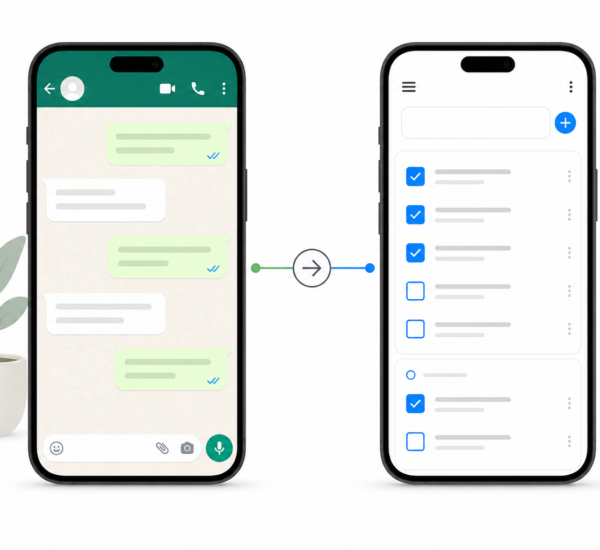
The practical approach is to use Any.do as the full task capture system, with the Ivy Lee method as the daily prioritization layer. Throughout the day and week, tasks are added to Any.do as they arise — from email, from meetings, from your own planning. This prevents the mental overhead of holding open loops in memory. Then, during the evening planning session, you open the task list, review everything due or relevant for tomorrow, and select and rank your six.
Any.do’s daily planner view makes this evening review fast. You can see all pending tasks alongside tomorrow’s calendar in a single view, which means the ranking decision is made with full awareness of what commitments already exist for the day. A day with three back-to-back meetings has different capacity for focused task work than a day with open blocks, and the Ivy Lee list should reflect that reality.
Time-blocking the first item on your Ivy Lee list into your calendar the night before takes the method one step further: the most important task has not just a rank but a specific time. When the morning arrives, task one has a time block, and that block is as protected as any meeting on the calendar.
What Makes the Ivy Lee Method Last
The ivy lee productivity method has survived a century because it solves the right problem. The issue with most productivity systems is not a shortage of tools or frameworks. It is the gap between knowing what is important and actually doing it first. The Ivy Lee method closes that gap with two constraints: a limit on how many tasks you commit to, and a rule that the most important task goes first.
The simplicity is a feature. A method that can be implemented tonight, with the task list you already have, without any setup or configuration, is a method that can actually be sustained. The techniques that require the most elaborate system-building are often the ones that get abandoned when the system becomes harder to maintain than the work it was supposed to organize.
The Ivy Lee method requires nothing except the discipline to make the list, rank it honestly, and start at the top the next morning. That is enough. It has been enough for over a hundred years.
Start Tonight
The entry point for the ivy lee method is tonight. Before you close your work for the day, open your task list and write down the six most important things you need to accomplish tomorrow. Rank them one through six. Do not negotiate — pick the one task that matters most and make it task one. Close the list. Tomorrow morning, open it and start at the top.
If you want a task system that supports the Ivy Lee evening ritual with a daily planner view that shows all pending tasks alongside your calendar, Any.do is free to get started. The daily planner view makes the nightly six-task selection fast and realistic, and the mobile app means you can complete the evening ritual from anywhere before the day closes.