
Freelancing gives you freedom but also gives you a second job: managing yourself. When you are the project manager, the worker, the accountant, and the sales team, things slip through the cracks fast. A missed deadline does not just cost you a task. It costs you a client.
That is why the right project management tool matters so much for freelancers. But here is the thing: most project management software was built for teams of 10 or 50 or 500. It is full of features you do not need, dashboards you will never check, and pricing tiers that assume multiple seats.
This guide focuses on what freelancers actually need and which tools deliver without the bloat.
What Freelancers Actually Need From a Project Management App
Before comparing tools, let us define the requirements. Freelancers are not just smaller versions of teams. Their workflows are fundamentally different.
Multi-project visibility. Most freelancers juggle 3 to 10 active clients at any given time. You need to see all of your commitments in one place, not switch between separate workspaces for each client.
Calendar and task integration. Freelancers live and die by deadlines. If your tasks and your calendar are in separate apps, things get missed. The best tool puts both in a single view.
Quick capture. When a client sends a request in an email, a Slack message, or a phone call, you need to record it instantly. If adding a task takes more than a few seconds, it will not happen consistently.
Minimal setup time. As a freelancer, every hour you spend configuring software is an hour you are not billing. The tool should work out of the box with minimal customization.
Mobile access. Freelancers work from coffee shops, co-working spaces, and their couches. The app must work as well on a phone as it does on a desktop.
Affordability. Most freelancers are cost-conscious, especially when starting out. A free tier or a low-cost plan that covers solo use is essential.
Top Project Management Apps for Freelancers
Any.do
Any.do is not a traditional project management tool, and that is exactly why it works so well for freelancers. It combines a to-do list, calendar, and daily planner in one clean interface, which is exactly what solo professionals need.
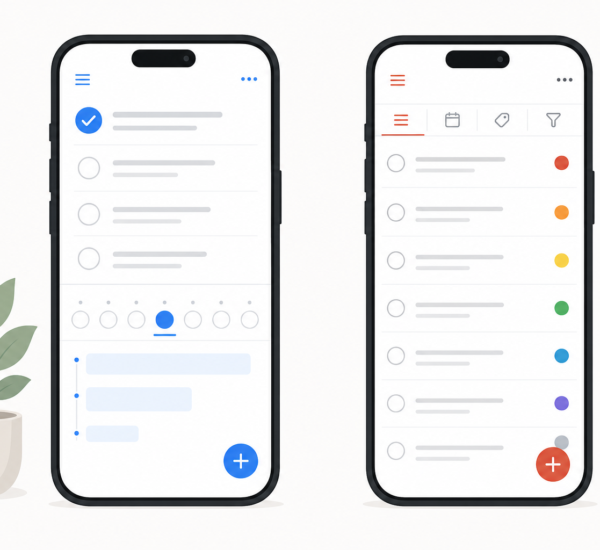
Create a list for each client. Within each list, add tasks with due dates, notes, and subtasks. Your daily view, My Day, pulls together everything that is due today from all your client lists, alongside your calendar events. You see your entire day at a glance.
Any.do’s AI-powered features can help you break down complex deliverables into subtasks, draft task descriptions, and plan your week more efficiently.
Other freelancer-friendly features include natural language task input (“submit invoice to Acme Corp by Friday”), smart reminders including location-based triggers, integration with Google Calendar, Outlook, Slack, and WhatsApp, a Kanban board view for visual project tracking, and file attachments from Google Drive, Dropbox, OneDrive, and Box.
The free plan covers basic task management. Premium ($5.99 per month) adds advanced reminders, themes, and AI features. For a full breakdown, see Any.do as a planner app.
Trello
Trello is the default Kanban board tool. Each client gets a board, each project gets a list, and each task gets a card. The visual layout makes it easy to see where things stand at a glance.
For freelancers, Trello works well for visual project tracking but falls short on calendar integration and daily planning. You can see what is on your board but not easily see what is due today across all boards. The free plan allows 10 boards per workspace, which is enough for most solo users.
Notion
Notion is the Swiss Army knife of productivity. You can build a custom project management system with databases, linked pages, templates, and dashboards. For freelancers who enjoy building systems, Notion is endlessly flexible.
The downside is complexity. Setting up a functional freelance workflow in Notion takes hours, and there is a constant temptation to rebuild it. If you want something that works immediately, Notion may not be the right choice.
Asana
Asana is a full-featured project management platform with task lists, timelines, and workload management. Its free tier supports up to 10 users, which is generous for freelancers who occasionally collaborate with subcontractors.
For solo use, Asana can feel heavy. The number of views, settings, and features can be distracting when all you need is a clear list of what to do today.
Plutio
Plutio is built specifically for freelancers. It combines project management with proposals, invoicing, time tracking, contracts, and a client portal. If you want an all-in-one business platform, Plutio is the closest thing to it.
At $19 per month, it is pricier than most task managers but potentially cheaper than paying for separate invoicing and project management tools.
Bonsai
Like Plutio, Bonsai targets freelancers with a combined project and business management platform. It includes invoicing, contracts, tax preparation, and time tracking alongside task management.
The project management features are less robust than dedicated tools, but if you value having everything under one roof, Bonsai is worth considering.
How to Manage Client Projects as a Freelancer
Regardless of which tool you choose, these principles keep things running smoothly.
One list per client, not one app per client. Keep all your clients in a single tool. Switching between apps fragments your attention and guarantees something gets forgotten.
Separate intake from planning. When a client request comes in, capture it immediately in your inbox or a quick-entry field. Later, during your daily planning session, move it to the right client list, assign a due date, and add any details. This two-step process ensures you never lose a request but also never interrupt focused work to organize it.
Set client deadlines one day early. If a deliverable is due Friday, set your internal deadline for Thursday. This buffer absorbs surprises and keeps you from ever delivering late. Late delivery is the fastest way to lose freelance clients.
Review weekly. Every Monday (or your first work day), scan all active projects. What is due this week? What is coming up next week? What is blocked? A 15-minute weekly review prevents surprise deadlines.
Use reminders aggressively. Set reminders not just for deadlines but for intermediate steps. “Start first draft of case study” on Monday. “Send draft for review” on Wednesday. “Incorporate feedback” on Thursday. “Deliver final version” on Friday. Each step gets its own reminder so the project stays on track without you having to remember every detail.
Invoicing and Time Tracking: Does Your PM App Need It?
Some freelancers want their project management tool to handle invoicing and time tracking too. Others prefer dedicated tools for those functions.
If you handle fewer than 10 clients and your invoicing is straightforward (fixed project fees or simple hourly billing), an all-in-one tool like Plutio or Bonsai can simplify your workflow.
If your invoicing is more complex (multiple rates, retainers, partial payments) or you already use a tool like FreshBooks or QuickBooks, stick with a focused task manager like Any.do and connect it to your invoicing tool through integrations or Zapier.
The key is to avoid duplicating work. If you are entering task data in one place and then re-entering it in another for billing, your system has a leak.
Conclusion
The best project management app for freelancers is one that makes your daily chaos manageable without creating more chaos in the process. It should show you everything that matters today, let you capture new tasks instantly, and stay out of your way the rest of the time.
Any.do does this with a clean design that merges your tasks and calendar into a single daily view. No onboarding courses, no configuration rabbit holes, no features that exist only for large teams.
You chose freelancing for the freedom. Your tools should feel the same way.