What Is the Zeigarnik Effect?
People remember interrupted or incomplete tasks better than completed ones. This is the Zeigarnik Effect, named after Soviet psychologist Bluma Zeigarnik, who described the phenomenon in 1927 after observing that waiters in a Vienna café could recall the details of unpaid orders with remarkable accuracy but forgot them almost immediately once the bill was settled. Incomplete tasks, Zeigarnik found, maintain a form of active tension in memory. Completed tasks are released. The zeigarnik effect productivity implication follows directly: unfinished work keeps running in the background of your mind whether you intend it to or not.
The zeigarnik effect tasks phenomenon shows up in everyday work in ways most people recognize immediately. The email you started but did not finish sits at the edge of attention during dinner. The project you left mid-way through surfaces at inconvenient moments. The task you promised a colleague but have not yet started occupies mental space even when you are focused on something else. This is not distraction in the ordinary sense. It is the brain doing exactly what it was designed to do: maintaining awareness of open loops until they are resolved.
The Psychology Behind Why Incomplete Tasks Haunt You
Zeigarnik’s original research showed that people recalled interrupted tasks approximately twice as well as completed ones in immediate memory tests. Subsequent research has added nuance to this finding, but the core mechanism has held up: incomplete tasks create what psychologists call a “goal tension,” a kind of cognitive activation state that keeps the task available in working memory until the goal is achieved or explicitly abandoned.
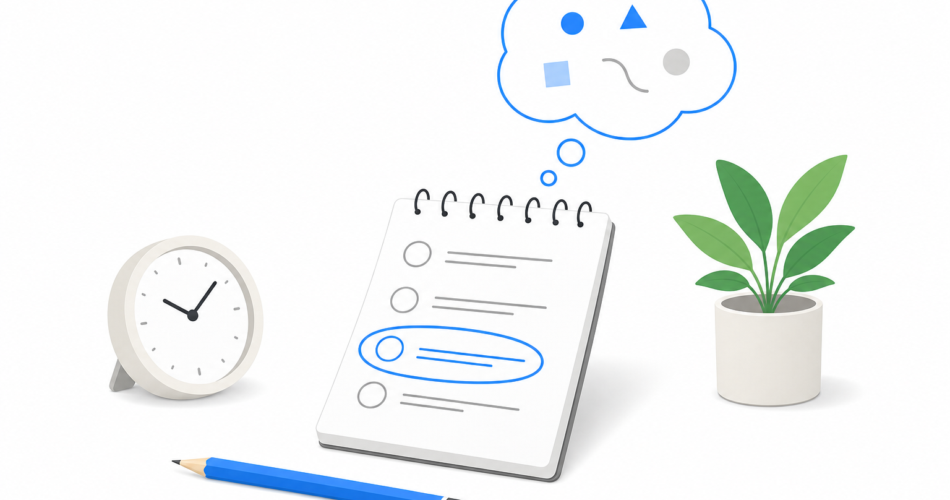
The brain treats an incomplete task like an open file. It does not close the file just because you stopped working on it. It keeps it in memory, flagged for future attention, consuming some of your available cognitive resources in the process. This is useful when the interruption is brief and you genuinely need to return to the task. It becomes a problem when you have dozens of open files running simultaneously, all competing for background mental processing during times when you are trying to focus on or recover from other work.
This is why knowledge workers often report feeling mentally exhausted at the end of a day even when they did not complete much visible work. The cognitive load of maintaining awareness of many incomplete tasks accumulates throughout the day. By evening, the brain is managing a complex system of open loops, and the intrusive thoughts that follow into personal time are a direct consequence of that unresolved tension.
How the Zeigarnik Effect Undermines Focus
The zeigarnik effect productivity cost is clearest during focused work sessions. When you sit down to work on an important project, the open loops from other incomplete tasks do not politely stand aside. They surface as intrusive thoughts at the moments of least welcome: when you are trying to hold a complex idea in mind, when you are reading something that requires full attention, or when you are in the middle of a creative flow state.
Research by Roy Baumeister and E.J. Masicampo found a key insight about this: the intrusive thoughts caused by incomplete tasks can be quieted not by completing the task but by making a specific plan for when and how to complete it. This finding has direct practical implications. You do not have to finish every open task to stop it from haunting you. You have to give the brain a satisfying answer to the question of when and how it will be handled. A specific plan, written down in a trusted system, closes the cognitive loop just as effectively as completion itself.
Using the Zeigarnik Effect to Your Advantage
Capture every open loop into a trusted task system
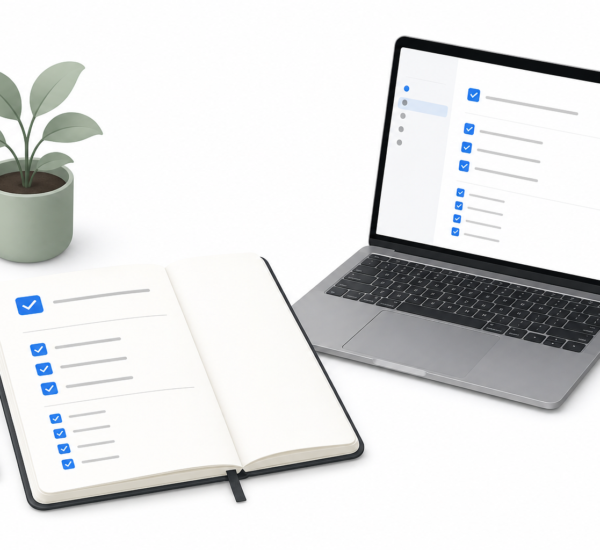
The most direct response to the Zeigarnik Effect is a reliable capture system. When every incomplete task, commitment, and open loop is recorded in a system you trust, the brain no longer needs to hold onto them. The cognitive file can be closed because the task exists somewhere you know you will encounter it again when the time is right.
The key word is trusted. A task list you update inconsistently or a capture tool you do not check regularly does not satisfy the brain’s need for resolution. The loop stays open because the brain has learned that the system is not reliable enough to hand over responsibility to. A capture system that you use consistently, that you review regularly, and that you trust to surface tasks when they are relevant is what closes the Zeigarnik loop reliably.
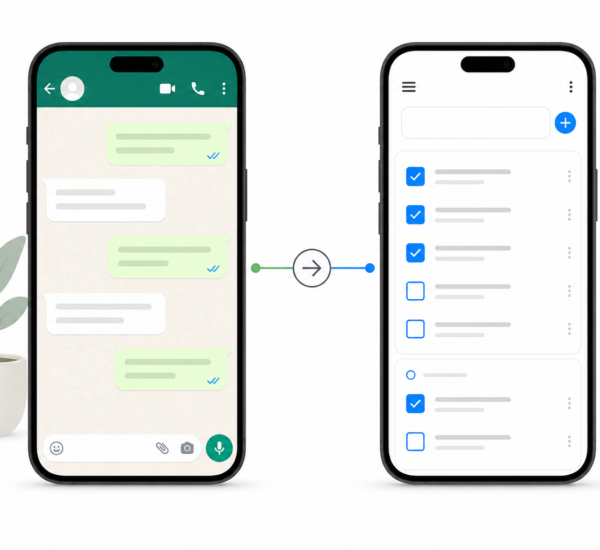
Any.do’s daily planner view and task inbox are designed for exactly this. Capturing tasks with due dates and priorities is what converts a mental open loop into a system entry that the brain can release. The moment a task is in the system with a plan, the intrusive background processing stops.
Use the shutdown ritual to close daily open loops
The end-of-workday open loop problem is one of the most common productivity complaints: work thoughts that intrude into evening and personal time, preventing genuine rest and recovery. The Zeigarnik Effect explains why this happens, and it also points to the solution.
A consistent end-of-day shutdown ritual that reviews all open tasks, captures anything unfinished, and makes a specific plan for tomorrow gives the brain the resolution it needs to disengage from work mode. Choosing tomorrow’s priorities before closing for the day is not just planning. It is a direct Zeigarnik intervention: you are answering the brain’s question of “what happens with these unfinished tasks?” with a concrete, specific plan. The goal tension dissolves because the goal now has a pathway.
The shutdown ritual in Any.do operationalizes this precisely. Reviewing completed tasks, capturing open items, checking tomorrow’s calendar, and choosing priorities before closing creates the cognitive closure that makes evenings feel like genuine recovery rather than interrupted work.
Use strategic incompletion to sustain momentum
The Zeigarnik Effect can be deployed deliberately rather than just managed as a problem. One of the most useful applications is stopping work on a task mid-way through, at a point where the next step is clear. Writers have used this technique for generations: ending a writing session mid-sentence rather than at a natural stopping point makes it significantly easier to return to the work the next day, because the open loop keeps the material active in mind and the re-entry point is obvious.
Applied to knowledge work more broadly, this means leaving a task at a point where momentum exists rather than completing it to a natural conclusion. End a project planning session before the plan is fully formed. Stop a research session when you have identified the next source but not yet read it. The incomplete state keeps the work accessible and reduces the re-entry cost of starting again.
Time-block focused work to prevent compounding open loops
One of the ways the Zeigarnik Effect compounds is through task switching. Every time you begin a task and leave it incomplete to move to another task, you add another open loop to the background system. Multitasking and frequent context switching are particularly costly from a Zeigarnik perspective because they rapidly multiply the number of incomplete items the brain is tracking simultaneously.
Time blocking focused work sessions is one of the most direct ways to limit this accumulation. When you commit a defined block of time to a single task or project, you minimize the number of new open loops created by starting things that are not finished. Finishing one thing before moving to the next, even if that finish is a defined endpoint rather than full completion, keeps the Zeigarnik inventory manageable.
The Zeigarnik Effect and Working Memory
There is a limited capacity version of the Zeigarnik Effect worth understanding. The original research showed superior recall for incomplete tasks in short-term memory tests. More recent research, particularly the work of Baumeister and Masicampo, focuses on the working memory cost of unresolved goals rather than long-term recall. The more practically important finding is not that you remember incomplete tasks better. It is that incomplete tasks without a plan for resolution occupy working memory capacity, reducing your available cognitive resources for the task in front of you.
This means that the performance cost of the Zeigarnik Effect is not just the intrusive thoughts. It is the reduced cognitive capacity for focused work caused by the background load of unresolved open loops. A well-maintained task system with plans for everything does not just reduce stress. It frees up working memory that would otherwise be consumed by managing open loops, leaving more cognitive capacity for the work that requires it.
Close the Loops Before They Close Your Focus
The Zeigarnik Effect is not a bug in how the brain works. It is a feature that keeps important commitments from falling through the cracks. The problem arises when the volume of open loops exceeds what the system can usefully manage, and background processing becomes a persistent source of cognitive load rather than a useful alert mechanism.
The solution is not to work faster or to feel guilty about unfinished tasks. It is to give every open loop a home in a trusted system, with a plan for when it will be handled. That plan, written down in a system you review and trust, is what the brain needs to release the goal tension and return its resources to the present moment.
If you want a task system that makes capturing, planning, and reviewing your open loops straightforward, Any.do is free to start. The daily planner view, due dates, and end-of-day review give you the structure that turns the Zeigarnik Effect from a source of mental noise into a tool for staying intentionally on top of everything that matters.